*
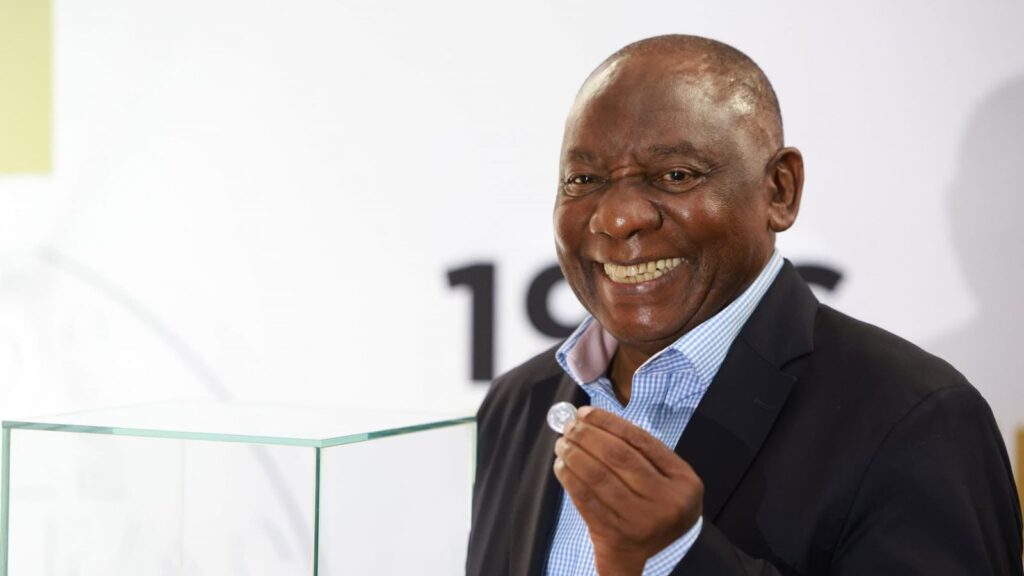
Ramaphosa verklaar onlangs dat sy regering (RNE) sowat 2,5 miljoen hektaar staatsgrond aan swart boere sal vrystel om die land se landboubasis ’n hupstoot te gee. Wat of moet mens eerder vra, wie is agter die kap van die byl? Daar is eenvoudig nie baie dinge wat optel en sin maak nie. Is hierdie nie eerder net verkiesingspropaganda of net ‘n ander duistere agendae wat oor die land, veral BOERE spoel nie? Dalk sluit dit eerder aan by die groot emmer vol wurms wat uitklim. Sodra die wurms uitkrioel skep die regering daarvan vir hulself, want die koeie van die belastingstaatskas word eenvoudig leeggesuig.
*
Daar is dan al hoeveel miljoene toekennings gedoen aan die onderskeie swart en gekleurde groepe in die land. Wie gee die regering die mandaat en opdragte om die staatskas wat inderwaarheid aan die belastingbetalers, behoort te misbruik?
Oor minder as ‘n maand sal daar verkiesings plaasvind in Suid-Afrika op munisipale en distrikte vlakte. Sommige leiers spring maar bont om kop bo water te hou, want verseker daal baie vandie politici se aansien om met gemak op vlak 3 regerings ‘n indruk te maak. Die grondvlak bewoners is ontevrede oor baie dinge wat hier in Suid-Afrika aan die gebeur is.
Dit kom voor wat beweer word, dat Suid-Afrika staatmaak op ‘n “relatief klein segment van die bevolking” om in sy voedselbehoeftes te voorsien, wat onvolhoubaar is. Die RNE regering het begin om grond met titelaktes aan swart boere vry te stel.
Daardie grond met titelaktes behoort in die eerste plek nie aan die regering nie. Wie se grond was dit? As die staatsamptenare daardie grond of plase gekoop het, het hulle eerstens nie hul eie geld gebruik nie, maar dié van al die belastingbetalers. Virseker sal die propaganda meestal na die verkiesing opeindig, leeg geplunder en selfs afgebrand. Die meeste plase in die verlede is aan swart bemagtiging begunstigdes oorgegee, het korrup geëindig en alles op die persele is omtrent onbruikbaar en vernietig. Vrugte boorde is nooit onderhou nie en sommige van die slagpales wat eens in bedryf was, is vernietig en as skrootmateriaal verkoop. Is nie die regeringsgeld wat gebruik is om landbougrond aan te koop met belastinginkomste en dan daaroor stil te bly nie. Word hierdie alles gedoen en gesê om nog meer rewolusie in die land aan te wakker, want alle aanduidings is of dit so voorkom. Is dit nie toevallig dat daar so baie immigrante en onwettiges in die land is nie?
Dit is nie die Boere en blankes se skuld dat daar al vir 30 jaar grond aangekoop word vir die regering met fondse uit die belastingbetalerskas nie. Die regering of amptenare gebruik nooit hul eie geld om grond of besighede te koop nie, maar die staatskas en belastingbetalers inkomstes. Dit wil sê hierdie eens produktiewe spogplase word waarskynlik in ‘n herhalende misbruik van korrupte fondse bevind. Trekkers en ander toebehore van plase wat nuut aangekoop is, staan soms onder die oop ruim en word blootgestel aan elemente. Saad is nooit of selde in die grond en eerder verkoop aan buurlande of is verouderd en onbruikbaar in die stoorkamers. In alle gevalle is daar sedert 1993 heelwat kompensasies aan die sogenaamde agtergeblewenes uitgedeel.
Waarom word daar vir dekades soveel klem geplaas op die plase en alle plaasgereedskap, wat opgekoop word met belastinggeld maar ander besighede wat swart bemagtig is, kry nie dieselfde behandeling nie. Heelwat ander besighede wat nie deel is van die landbousektor, se deure word soms binne dae toegemaak en tegehou. Daar is al honderde duisende swart bemagtiging (CPA) KEV en Trustgebiede geregistreer, waartydens hulle hul eie leiers aanwys as tradisionele leiers. Leiers kry dan salarisse en byvoordele uit die staatskas uit.
Hierdie gebiede wat Gekroonde gebiede of Trust of Reservaatgebiede genoem is, was REEDS daar wat swartes beset het na 1806.
Aparte gebiede – Duncan Du Bois
Swart en gekleurde groepe het reeds sedert 1993 geleentheid gehad om grond op te eis in hul duisende en massas. Dit is na 1993 toegeken, met triljoene rande wat uitgedeel is, saam toebehore en toerusting, trekkers, saad wat uitgedeel is in die proses. Mbeki het ook van die grondgebiede uitgewys en gedurende 2007 toegeken. Al die ou tuislande (reservate na 1800) het behoue gebly en is na 1993 grondeise ingedien en heelwat betalings is gedoen.
Niemand van die ou reservate of kroongebiede het hul gebiede verloor nie, hulle bly dan steeds daarop, regdeur al die oorloë met die Boere, het hulle nooit hul grondgebiede verloor nie. Dit word in verskeie grondwette beskerm, maar volgens hulle besit hulle GEEN grond nie,wat ‘n leuen.
DIE BOERE VOLK EN VEELVOLKIGE AFRIKANER REëNBOOGNASIE IS NIE DIESELFDE NIE
Dit is slegs die BOERE volk wat hulle Boere republieke verloor het. Hulle is ingedwing in die 1910 grondwet. Afrikaner leiers toe en selfs met die 1914 BOERE rebellie is daar ontslae geraak van al die Boere leiers deur hulle ter dood te veroordeel omdat hulle nie vir Engeland wou gaan veg het in Suidwes-Afrika nie. Die VREDES verdrag van 1902 is baie duidelik dat die Boere republieke herstel moes word, maar Afrikaners en sommige Engelse het bly voortploeter om een UNIE te word.
Grond eienaars: ANC regeringsplase
Tuislande en Trustgebiede in Suid-Afrika
Trustgebiede – Tuislande – Reservate en Kroongebiede
Gold and diamonds -1886 – Griqualand West
Richtersveld – KHOISAN AND CPA
Diamonds/Diamante – Gold/Goud -MINERALS
*

The President delivered his Budget Vote speech in June 2026 and said the Government would begin releasing the land they have acquired over the years to black farmers. This land amounts to about 2.5 million hectares across the country. The Department of Land Reform and Rural Development has begun releasing this land with title deeds to beneficiaries.
https://www.gov.za/news/speeches/president-cyril-ramaphosa-visit-redlands-dairy-farm-08-oct-2026
*
Nou is daar glo te min landbouers wat swart genoeg is om dit uit te voer, terwyl daar vir meer as 30 jaar produktiewe plase, met kompensasie aan die agtergeblewenes oorhandig is.
Swart bemagtiging is ‘n INTERNASIONALE MISDAAD, RASSISME EN DISKRIMINASIE
Om uit te voer is belangrik… en word gefokus op oorseese lande

*
Ramaphosa recently announced that his government (the GNU) would release approximately 2.5 million hectares of state land to black farmers to boost the country’s agricultural base. What—or perhaps one should ask, *who*—is driving this initiative? Simply put, many aspects of this do not add up or make sense. Is this merely electioneering, or is it another murky agenda sweeping across the country? Perhaps it is simply part of the proverbial “can of worms” being opened. Once the worms start wriggling out, the government helps itself to the spoils, effectively draining the state coffers dry. Who gave them the mandate and instructions to misuse the public purse—funds that actually belong to the taxpayers? It is not the governments money nor the land belong to them. Is all this being said and done to stoke even more revolution in the country? Because all indications suggest that this is the case.
Elections at the municipal and district levels are set to take place in South Africa in less than a month. Some leaders are scrambling to keep their heads above water, as the ability of many politicians to make a real impression at the local government level is clearly on the wane. Residents on the ground are dissatisfied with many of the things happening here in South Africa.
It is claimed that South Africa relies on a “relatively small segment of the population” to meet its food needs—a situation that is unsustainable. The GNU government has begun releasing land, complete with title deeds, to black farmers. In the first place, that land—held under title deeds—does not belong to the government. Whose land was it? When state officials purchased that land or those farms, they did not use their own money; instead, they used funds from the taxpayers. Inevitably, most of these properties end up stripped bare and even burned down after the election. In the past, most farms handed over to black empowerment beneficiaries met a corrupt end, with everything on the premises rendered virtually unusable or destroyed. Fruit orchards were never maintained, and some of the abattoirs that were once operational were destroyed and sold as scrap metal.
It is not the fault of Boers and white people that land has been purchased for the government using taxpayer funds for the past 30 years. The government and officials never use their own money to buy land or businesses; they use the state coffers and taxpayer revenue. This means that these once-productive, showcase farms likely become the subject of the recurring misuse of corruptly handled funds. Tractors and other farm implements purchased new are sometimes left out in the open, exposed to the elements. Seeds are rarely planted; instead, they are sold to neighboring countries or left to become outdated and unusable in storage rooms. In all cases, significant compensation has been distributed to the so-called disadvantaged since 1993.
Why has so much emphasis been placed for decades on farms and farming equipment—purchased with taxpayer money—while Black-empowered businesses do not receive the same treatment? Many other businesses outside the agricultural sector sometimes have their doors closed and operations halted within a matter of days. Hundreds of thousands of Black empowerment entities—such as CPAs and Trusts—have been registered, allowing them to designate their own leaders as traditional leaders; these leaders then receive salaries and benefits from the state coffers.
Black and Coloured groups have had the opportunity to claim land in their thousands and masses since 1993. Allocations were made after 1993, with trillions of rands distributed, along with the provision of implements, equipment, tractors, and seed during the process. Mbeki also identified specific land areas and allocated them in 2007. All the old homelands (reserves dating from after 1800) remained intact; land claims were lodged after 1993, and substantial payments were made.
Most Trustlands only have communal rights. NO title deeds at all. Ingonyama trust is the same, was their leaders’ choice.
Ingonyama Trustland (Zulu people)
Grondhervorming -besetting: Suid-Afrika
Tuislande en aparte gebiede in Suid-Afrika
Zoeloes Ingonyama Trust and land reform
*
VISITED Redlands Dairy Farm.
It was stated that it is encouraging that there are formal mentorship initiatives such as Farmers for Africa, Grain SA’s Phahama Grain Phakama, the Citrus Growers Association Vision 260, where black farmers aim to capture a notable share of exports by 2032, as well as schemes run by leading banks, Landbank, agribusinesses and Government. The Land Bank and other development finance institutions must leverage government support to mobilise additional capital from financial markets, commercial banks, development partners and the private sector. About half of what South Africa produces goes to export markets. In 2025, the value of these exports was around R266 billion.
https://www.gov.za/news/speeches/president-cyril-ramaphosa-visit-redlands-dairy-farm-08-oct-2026
*
Contact Admin:
Admin kan gekontak word by
volksvryheid9@gmail.com
*


