*
Daar is altyd nabetragtings in enige misdaadtoneel wat sensitief en traumaties is. Daar is ander volke wat klippe gooi om te stenig en regering wat alles ontken dat dit nooit gebeur nie. Dis omdat hulle nie in die Boere volk se skoene staan, fisies aangeval of gemartel word nie, daarom leef hul in ontkenning. Enige aanval, marteling en moord is traumaties. Dit is somber, hartseer vir families en vriende om deur sulke situasies te beweeg. Die Boere volk ontken nie daar is nie ook ander moorde nie, maar elke volk het die reg om op te staan vir hul volkslede wat vermoor en uitgewis word. Dit is ‘n internasionale mensereg en die Grondwet spel dit uit, dat elkeen die reg tot lewe het.
*
Die hartseer van iemand kosbaar na aan jou, kan nie eenkant geplaas word soos gewone misdaad nie omdat dit juis ‘n realistiese werklikheid is wat voor hul oë afgespeel het. Martelings en moord is nog minder ‘n gewone misdaad.
Waar martelings in realiteit voorkom, is dit haat in die misdadigers se lewe, dis afskuwelik en onmenslik wreed. Hul missie en doelwit is om soveel as moontlik met ‘n glimlag te martel en dan te vermoor. Hoe kan die misdadigers en moordenaars voortleef as hulle sulke dade pleeg? Maak en lewe asof dit ‘n gewone dagtaak is. Die bloedbevlekte hande sal nooit skoonwas nie. Regerings en ander wat lief is om alles te ontken, maak hulself aan daardie martelings en moorde skuldig en keur hul daardie dade goed. Al word daar gevra vir vergifnis na aantal jare, kan dit nie gebeur nie, dis ‘n saak van onmoontlikheid.
*
Dit is Desember 2021.
In antwoord op ‘n vraag deur die DA in die Vrystaatse Wetgewer het die LUR vir Polisie, Paaie en Vervoer, mnr. William Bulwane, aangedui dat daar tussen 2018 en tot dusver in 2021, ‘n aantal van 13 841 aangemelde gevalle van veediefstal was, met slegs 4002 arrestasies en 605 skuldigbevindings. Dit wil sê, nog meer skuldiges loop snags en bedags rond om te vermoor. Dit impliseer ‘n gemiddelde arrestasiekoers van 29%, en slegs 15% van diegene wat gearresteer is, is skuldig bevind. Gedurende dieselfde tydperke is 81 plaasaanvalle aangemeld met 76 arrestasies en 11 skuldigbevindings, wat impliseer dat slegs 14,5% van diegene wat gearresteer is tot dusver skuldig bevind is. Dit opsigself is uiters swak en is dit duidelik dat die misdadigers meer regte het as die slagoffers.
Materiële waardes van vee diefstalle, gaan terug in die geskiedenis van die land – die sindikate
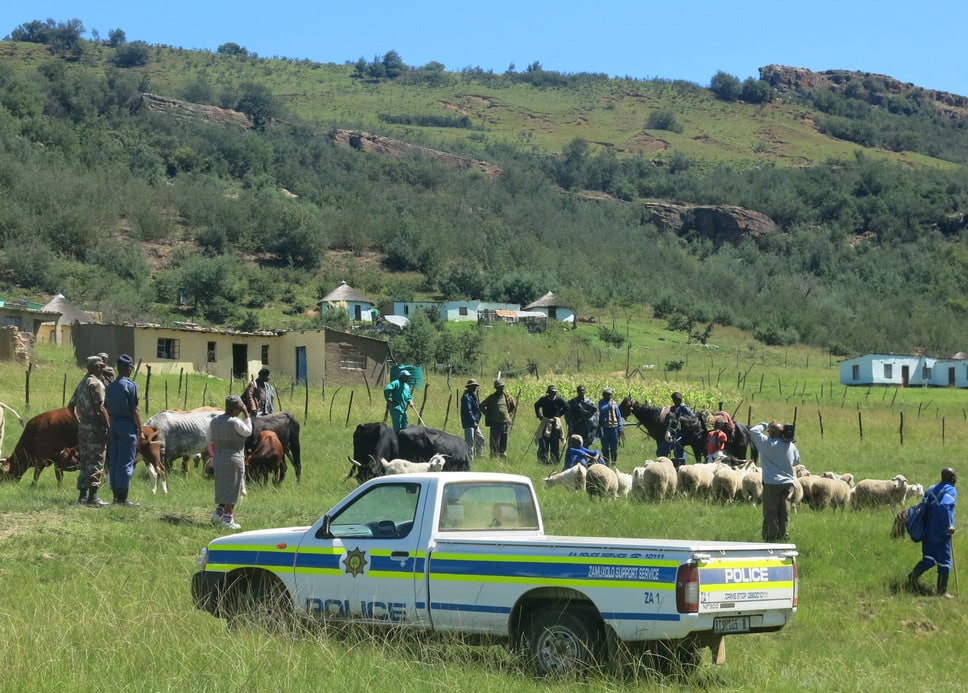
Daar is meer as 131 000 gevalle van gesteelde vee elke jaar, en dit is maar ‘n druppel in die emmer wat wel aangemeld word. In baie gevalle word dit nie eers meer aangewend nie, juis omdat dit soms doelloos is. Is die Polisie en regering regtig eerlik om korrupsie, diefstal en moorde te stop in Suid-Afrika. Vir baie is die steel of doodmaak van vee ‘n beroep wat hulle uitoefen.
Vleis is vir misdadigers ‘n lonende inkomste op ‘n daaglikse basis wat nie sal huiwer om ‘n mes of vuurwapen te gebruik om dit te bereik nie. Die mag van sindikate hierin kan hoegenaamd nie uitgesluit word nie. Meeste BOERE wat so aangeval, gemartel en gedood word, se vee word ook soms gesteel of ander produkte. Meeste gebiede betrokke het altyd ‘n minerale waarde op die plek en word diefstalle met opset uitgevoer, juis om persone hardhandig van plase te verwyder. BOERE, landbouers en plaaslike gemeenskappe, moet 24/7 ‘n dag gewapen wees en selfverdedig.
Volgens die artikel is daar in die Vrystaat alleen ongeveer 4 000 veediefstalgevalle wat jaarliks aangemeld word. ‘n Beduidende hoeveelheid veediefstalle word nie aangemeld nie, aangesien boere voel dat niks in elk geval gedoen sal word nie, wat beteken dat duisende meer gevalle by hierdie getalle gevoeg moet word.
Volgens Statistiek Suid-Afrika kom die nie-aanmelding van veediefstal neer op ongeveer 70.7% van gevalle. UNISA skat die waarde van vee wat gedurende 2019/2020 gesteel is, op beraamde bedrae van ongeveer R1 179 458 600. Gemiddeld word daar daagliks ongeveer 182 beeste, 282 skape en 138 bokke in Suid-Afrika gesteel. Die pad tussen Ficksburg en Senekal word al ‘n rukkie gemonitor en gedurende hierdie tyd was daar gemiddeld ongeveer 40 voertuie met sleepwaens wat skape per maand vervoer het. Die sleepwaens het ‘n minimum van 30 skape op ‘n slag gehou, wat neerkom op ongeveer 14 400 skape per jaar wat slegs op hierdie roete vervoer word. BOERE moet onthou, sodra daar ‘n klein inkomste gewys word aan die werkers of op die plaas, sal daardie BOERE teikens word. Sindikate het oral oë en ore om later toe te slaan wanneer BOERE dit die minste verwag. In dorpe en stede word persone ook dopgehou sodat daar ingebreek kan word. Meestal word werkers aangewend om binnekring inligting teen ‘n prys te deel. DUS PASOP vir werkers wat te maklik vertrou word.
Behoefte bepalinge word soms deur kenners naby aan die Boer en besigheid gedoen – dit loop hand aan hand saam sindikate en georganiseerde misdaad
Waarheen gaan die gesteelde vee? Die omvang van veediefstal is eenvoudig te groot om net op die informele mark verkoop te word. Soms verdwyn daardie vee of pluimvee juis in al die omliggende plakkersdorpe in vir ‘mededeelsaamheid’.
Gesteelde vee word soms hermerk en dan weer by die produksieketting gevoeg waar dit op veilings aan boere, veespekulante en slagpale verkoop word.
Veediefstal is as sodanig dan ‘n gespesialiseerde, georganiseerde misdaad.
In sy dae, het Cele genoem dat die impak van veediefstal net so groot, indien nie groter nie, is as dié van diefstal van kontant-in-transitvoertuie en daarom ernstig opgeneem moet word. Om veediefstal effektief te bestry, moet alternatiewe benaderings en strategieë oorweeg word. Hang weer eens af wie die sindikate is en wat die einddoel is
Volg die geldmag. BOERE, hul gesinne en soms plaaswerkers, word al vir etlike jare aangeval of vermoor en soos gesien kan word, is dit nie lank daarna wat myne in dieselfde gebiede ontstaan en permitte deur die regering uitgereik word.
Witkruis monument 2021 Boer and farmers killed in South Africa
Witkruismonument 16 September 2023
*
April 2022 in Parliament
https://pmg.org.za/files/RNW930-2022-04-13.docx
In South Africa, each year more than 131 000 cases of stolen livestock are reported. In the Free State alone about 4 000 stock theft cases are reported annually. In 2019/2020, the value of stolen livestock was estimated at about R1.1 billion and on average there are about 182 cattle, 282 sheep and 138 goats being stolen every day in South Africa
*
2025
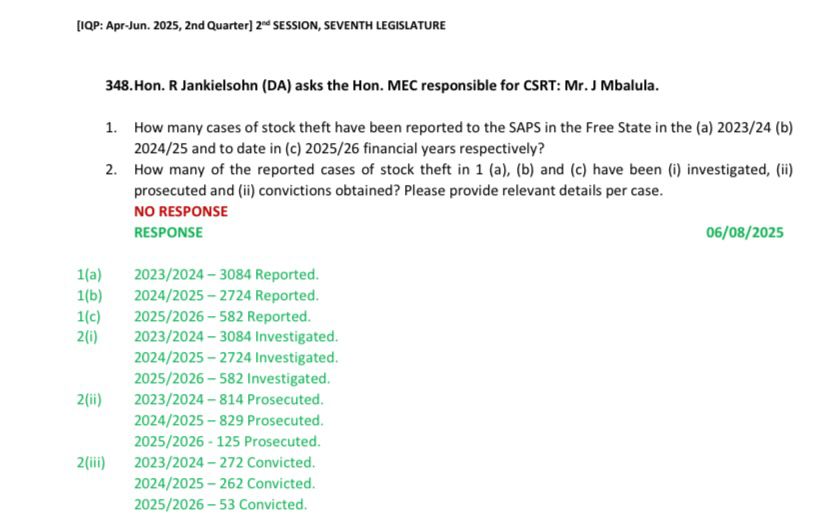
In reply to a question by the Democratic Alliance in the Free State Legislature, the MEC for Community Safety, Roads and Transport, Mr Jabu Mbalula, indicated that in the past two and a half years, from 2023 to date in 2025, a total of 6 390 cases of stock theft were reported to the SAPS, of which 1768 were prosecuted with 587 convictions. This comes down to an average prosecution rate of 27,7% and a conviction rate of only 9%.
https://fs.da.org.za/2025/09/da-is-concerned-by-9-stock-theft-conviction-rate-in-the-free-state
*
Die Boere veg verbete, net om te oorleef, en indien hul hulself verdedig, word hulle in die tronk gegooi as hulle iemand doodskiet wat hul lewens bedreig.
14 September 2024
The Chairperson of the Portfolio Committee on Police, Mr Ian Cameron, expressed concern over the abhorrent actions of criminals in the Goldfields area in the Free State that saw the mutilation of cattle affecting farming in the area. The barbaric action not only robs the farmers of future production but feeds into the systematic criminality in the area, as it is suspected that the slaughtering happened to obtain meat for illegal miners.
The recent fourth quarter of 2023/24 and the first quarter of the 2024/25 crime statistics reveal a worrying increase in stock theft, which can hinder agricultural productivity, a critical pillar of the South African economy. In a country struggling with a high unemployment rate and poverty, the increase in stock theft negatively affects emerging and small farming businesses. In the fourth quarter, there were 6 228 cases of stock theft, an increase of 5.5% compared to the same period last year. Between April and June 2024, there were 6 321 cases of stock theft, an increase of 0.4%.
*
BYKOMENDE INLIGTING
South Africa – Senekal – Stock theft syndicate – killing of farmer
Stock Theft – Farm attacks – killings – South Africa Freestate/Lesotho
Torture of cattle – Marteling van vee
*
December 2021
In reply to a question by the DA in the Free State Legislature the MEC for Police, Roads and Transport, Mr William Bulwane, indicated that between 2018 and so far in 2021 there were 13 841 reported cases of stock theft with only 4002 arrests and 605 convictions . This implies an average arrest rate of 29%, and only 15% of those arrested being convicted. During the same time frames 81 farm attacks were reported with 76 arrests and 11 convictions which implies that only 14, 5% of those arrested are so far convicted.
Stock theft is much higher than reported as the low arrest and conviction rates serve as deterrents for the reporting of such crimes. In many instances people who admit to crimes at the scene, submit very different statements when reaching police stations. That creates suspicions that the perpetrators are coached by the SAPS on what to say to avoid prosecution. Victims of such crimes are also subjected to tedious court proceedings and delays without successful convictions, often due to incomplete or poor police dockets. In some instances the victims of stock theft are arrested and charged for alleged assaults while apprehending stock thieves on their properties.
https://content.voteda.org/free-state/tag/farm-attack/
*
Article November 2021
Stock theft is an emotional topic for farmers but the full impact has not yet been realized. Most farmers seems to be apathetic towards the problem and only react when someone steals from them. Most of the operations and patrols focusses on the so-called runners who are responsible for stealing the stock. Farmers and the SAPS are using an enormous amount of energy, time, and resources to combat stock theft, but they are fighting a losing battle at this point.
There are more than 131 000 cases of stolen stock each year. The Free State alone has about 4 000 stock theft cases reported yearly. A significant amount of stock thefts are not reported as farmers feel that nothing will be done in any case which means that thousands more cases need to be added to these numbers. According to Statistics South Africa the non-reporting of stock theft comes down to about 70.7% of cases. UNISA estimates the value of livestock stolen during 2019/2020 to be around R1 179 458 600. On average there are about 182 cattle, 282 sheep and 138 goats being stolen every day in South Africa. The road between Ficksburg and Senekal has been monitored for a while and during this time there was on average about 40 vehicles with trailers transporting sheep per month. The trailers held a minimum of 30 sheep at a time which comes down to about 14 400 sheep per year that are being transported only on this route.
Where do the sheep come from and where is the outlet area? The majority of the public is of the opinion that stock that is stolen is being used as food sources in local townships. However, when we look at the numbers it becomes clear that there does not exist such a large informal market for stock. Bheki Cele, Minister of Police, asked during his visit to Senekal after the murder of Brendin Horner, where stolen stock goes and how the thefts take place. We realised that stock is being stolen by runners who are paid as little as R500 per night. These people steal enough livestock to fulfill the order, these livestock are then either hidden for a while or immediately loaded onto bakkies and trailers to be distributed. Sheep that remain after the order has been filled are sold in the local informal settlements. Cattle are driven for several kilometers and young lambs that slow down the process are swiftly killed. Livestock is then transported to neighboring countries and farms until the case has cooled down. Citizens of Lesotho are often involved in stock theft in the Free State and farmers in Lesotho are suffering under the same syndicates.
Where are the stolen stock going to? The extent of stock theft is simply too great to just be sold on the informal market. Stolen stock are rebranded and then added once again into the production chain where they are sold at auctions to farmers, livestock speculators and abattoirs. Stock theft, as such, is then a specialised, organised crime. Cele mentioned that the impact of stock theft is just as big, if not bigger, than that of robbery of cash in transit vehicles and therefore must be taken seriously. To combat stock theft effectively alternative approaches and strategies needs to be considered.
It is clear that there should be a greater focus on transport, outlets, buyers and identification of stock to destabilise the stock theft ring. The provincial office of the SAPS in the Free State has already done a lot in this matter. There were a lot of operations in the province over the course of the year. One of the operations involved stopping vehicles with trailers transporting livestock for a few months to check their documentation and loads. A lot of these drivers did not have the correct documentation. In time a lot of these people registered their own brandings and added the brand to their documentation, even citizens from Lesotho has their own brandings. Fines have been issued but have since been withdrawn or have simply not been paid. The National Prosecution Authority (NPA) sometimes refuses to prosecute these people or cases are simply removed from the court roll – this tendency also needs to be placed under scrutiny. Cases that are simply withdrawn or removed undo’s the work of the SAPS and demotivates them to do something about the problem in the future. Livestock farmers, at the end of the day, must carry the consequences of poor prosecution. The only way this problem will be actively addressed is to ensure that offenders are brought before the court. Documentation and ownership of stock will be assessed carefully, and offenders must be prosecuted. Stock theft needs to be investigated as an organised crime with the help of proper experts.
Who is the stock thief? It could be your neighbour, your local livestock speculator or auctioneer. Do not be the one to buy stolen items on the street corner. Farmers must take responsibility for branding their stock and having the correct documentation filled out to avoid the possibility of a criminal record. Auctioneers and speculators can no longer shrug and say that they did not know. It is high time that this industry is cleaned up.
*
Bronne en verwante inligting/ artikels
https://www.harvestsa.co.za/2021/11/12/the-impact-of-stock-theft/#:
*
2020
A Police officer was in 2020 investigated for stock theft. His Honda fit vehicle was confisticated ,and four of his goats were taken from him.later on he was taken before a Class II board for a disciplnary on the basis of stock theft case .suspended but later reinstated he forfeited his leave days. The Honda car still in the hands of the Police.
*
BYKOMENDE INLIGTING
Plaasmoorde – MOORDE – Farm killings
Farm murders – Plaasmoorde
Prioriteit Plaasmoorde, -aanvalle Farm killings, -attacks
In Parliament – One settler one bullet and Kill the Boer song
Kill the Boer, kill the Farmer
Verskroeide aarde, Mfecane: Kill the Boer lied
*
Contact Admin:
Admin kan gekontak word by
volksvryheid9@gmail.com
*

 ONAFHANKLIK
[…] 2021 – Impak van SA veediefstalle, plaasaanvalle en moorde […]
LikeLike
[…] 2021 – Impak van SA veediefstalle, plaasaanvalle en moorde […]
LikeLike
[…] 2021 Impak van SA veediefstalle, plaasaanvalle en moorde […]
LikeLike
[…] 2021 – Impak van SA veediefstalle, plaasaanvalle en moorde […]
LikeLike