*
‘n Artikel gedurende 2011 van Oos-Afrika het ‘n paar dinge verduidelik en oor die hoof gesien in terme van sy koolwaterstofpotensiaal vir baie jare, word toenemend beskou as ‘n eksplorasie-‘hotspot’, met onlangse ontdekkings in die Albertine-skeur en in die buiteland van Tanzanië wat tot herlewing in belangstelling gelei het. Die streek, wat deur die Oos-Afrika-skeurstelsel (EARS) oorheers word, het ‘n komplekse geologiese geskiedenis en bied die potensiaal om moderne tegnieke bymekaar te bring om geologiese begrip te help en om koolwaterstofeksplorasie doeltreffend te teiken.

*
Die oorsake is soms nie net altyd plate wat verskuif nie, maar ander dinge wat gebeur en veroorsaak dat plate vinniger verskuif. Alles word dan vinniger vernietig en beland op die bodem van die oseaan.
Daar word enorme hoeveelhede minerale uit Afrika uitgehaal en ook elders anders gebruik. Moenie hierdie myneksplorasies onderskat en skade wat dit gedoen word nie. Min of selde word hierdie myne ooit gerehabiliteer, nes hier in Suid-Afrika waar duisende myne ongerehabiliteer is en voetspore van erosie, besoedeling en suurwater agterlaat vir die armes wat daar woonagtig is. Indien minerale diep uitgedelf word, veroorsaak dit tonnels wat later met reënwater vul en met chemikalië meng en die suurwater veroorsaak. Hierdie veroorsaak insinkings, nie net in Afrika nie. Minerale ontginnings en ongerehabiliteerde myne verwoes alle landbougrond wat voedselsekerheid in gevaar stel en veroorsaak.

Daar is ‘n paar plekke waar ‘n geoloog dit die seebodem sou noem, eintlik droë land is. Een so ‘n voorbeeld, is die Danakil depressie, wat naby die noordelike hoekpunt van die Afar Driehoek lê, ‘n skeurvallei wat strek vanaf die Dallol vulkaan in Ethiopië verby die soutvlaktes van die Assal meer, in Djiboeti, tot by die noordwestelike punt van Somalië, en dan binneland na Awash.
Miljoene jare gelede was die Danakil inderdaad deur die see bedek. Die Rooi See. Maar vulkaniese uitbarstings het versperrings van lawa gevorm wat dit van die see geïsoleer het. Die water wat oorgebly het, het in die intense hitte verdamp, wat pekelmere en soutvlaktes gelaat het. Dit word ontgin, en die gevolglike soutplate word deur kameel uitgevoer, deur nomadiese burgers van die Afars.
Afrika se minerale potensiaal is goed bewys en bestaan uit groot hulpbronne van goud (Suid-Afrika, Wes-Afrika, Oos-Afrika), diamante (Angola, Botswana en DR Kongo), platinumgroepmetale of PGM’e (Suid-Afrika), koper (DR Kongo, Zambië en Namibië), steenkool (Suid-Afrika, Mosambiek, Zimbabwe), uraan (Namibië, Niger), ystererts (Suid-Afrika, Guinee), en bauxiet (Guinee, Ghana). Verder word baie van hulle deur meer gevorderde ekonomieë as kritiek beskou.
Die wêreldwye mynbedryf het in 2022 VS$1,1-1,2 miljard in eksplorasie in ongeveer die helfte van die Afrika-lande belê, meestal op goud in Mali, Ghana, Ivoorkus, Suid-Afrika en Ghana, en koper en goud in die Demokratiese Republiek van die Kongo.
*
Africa and its mineral potential is well-proven and comprises major resources of gold (South Africa, West Africa, East Africa), diamonds (Angola, Botswana, and DR Congo), platinum group metals or PGMs (South Africa), copper (DR Congo, Zambia and Namibia), coal (South Africa, Mozambique, Zimbabwe), uranium (Namibia, Niger), iron ore (South Africa, Guinea), and bauxite (Guinea, Ghana). Furthermore, many of them are considered critical by more advanced economies.
The global mining industry invested US$1.1-1.2B in exploration in 2022 on about half of the African nations, mostly on gold in Mali, Ghana, Côte d’Ivoire, South Africa, and Ghana, and copper and gold in the Democratic Republic of the Congo.
*
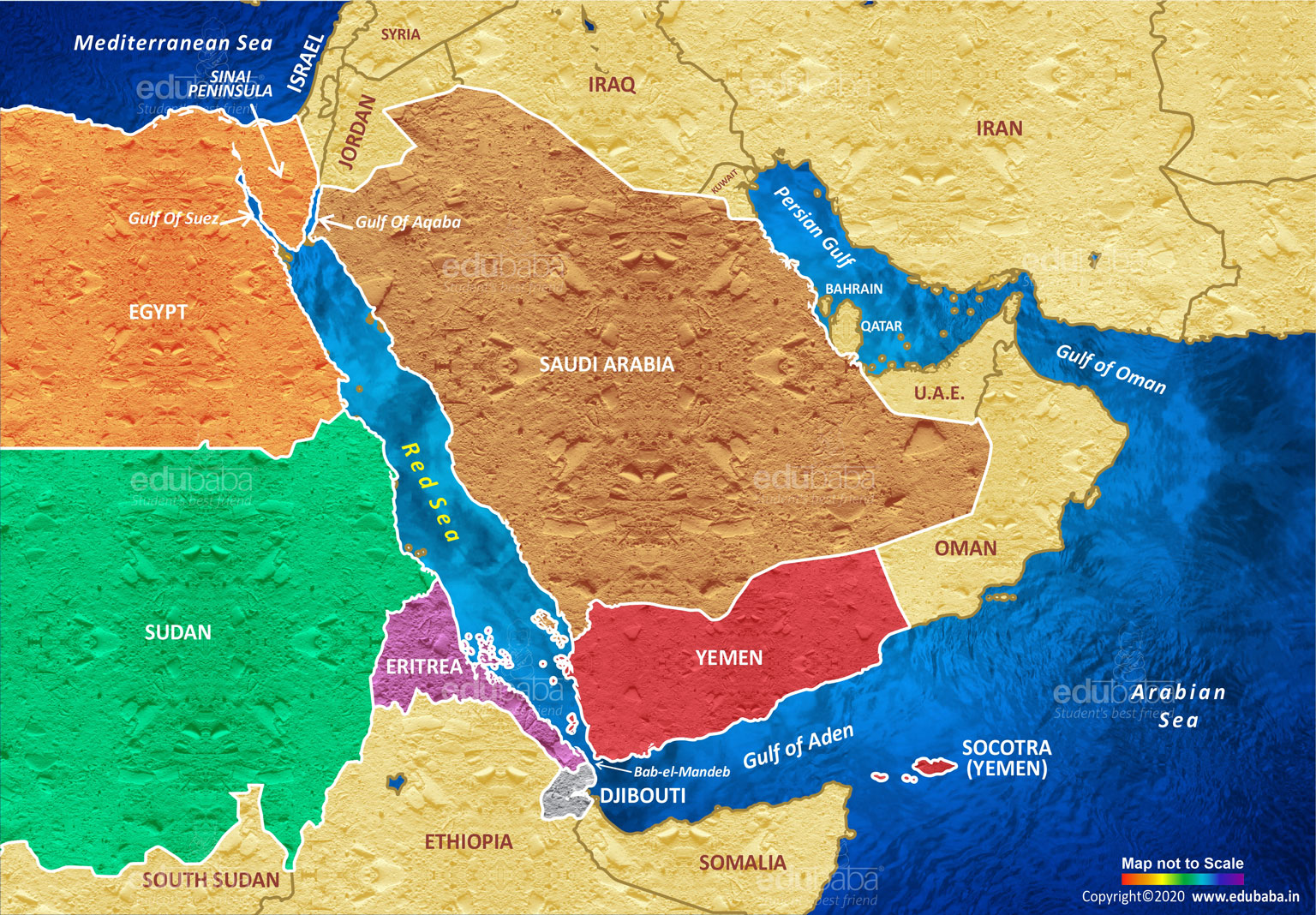
Die Rooi see en lande aan die anderkant vorm deel hiervan
https://www.garmin.com/en-AU/p/13416
*
An article during 2011 of Eastern Africa explained a few things and overlooked in terms of its hydrocarbon potential for many years, is increasingly viewed as an exploration hot spot, with recent discoveries in the Albertine Rift and offshore Tanzania leading to resurgence in interest. Dominated by the East Africa Rift System (EARS), the region has a complex geological history and provides the potential to bring together modern techniques to aid geological understanding and to help efficiently target hydrocarbon exploration.
*
There are a few places where what a geologist would call the ocean floor is actually dry land. One such is the Danakil depression, which lies near the northern vertex of the Afar Triangle, a rift valley stretching from the Dallol volcano in Ethiopia past the salt plains of Lake Assal, in Djibouti, to the north-west tip of Somalia, and then inland to Awash. Millions of years ago, the Danakil was indeed covered by the sea—in its case, the Red Sea. But volcanic eruptions formed barriers of lava that isolated it from the ocean. What water remained evaporated in the intense heat, leaving brine lakes and saline flats. These are mined, and the resulting slabs of salt exported by camel, by nomadic Afars who are the nearest thing the depression has to permanent inhabitants.
https://www.economist.com/science-and-technology/2016/10/27/topsy-turvy
https://www.economist.com/science-and-technology/2016/10/29/in-an-octopuss-garden
*
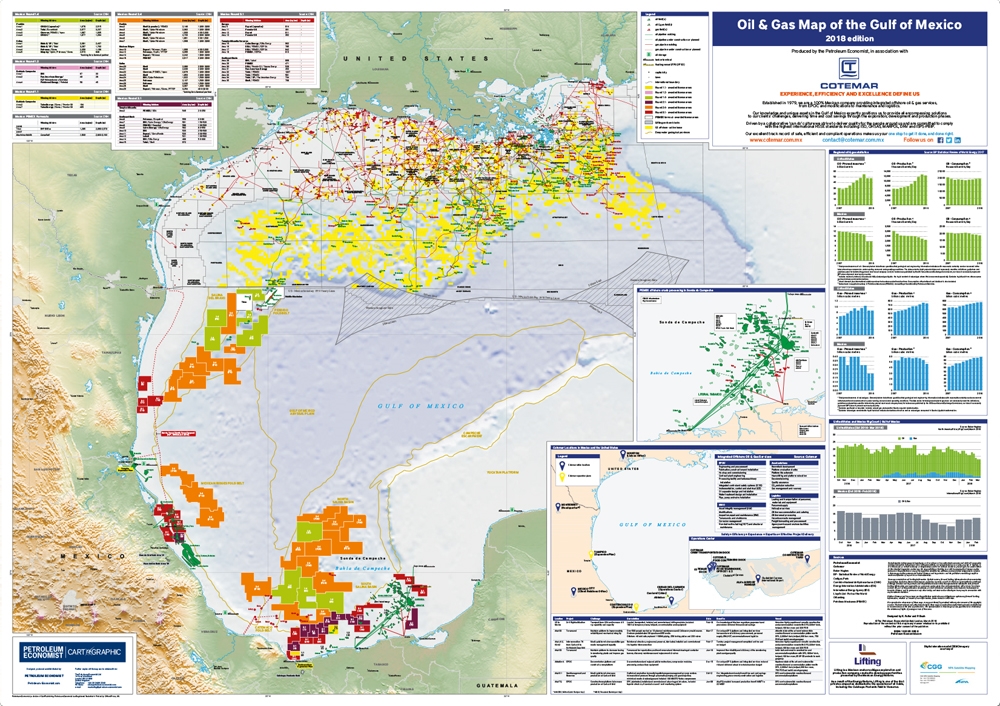
AMERIKA SE SKEURINGS

Skeurings gebeur op kontinente, ook op die Amerikaanse kontinent, nie net Afrika nie. Oral word minerale uitgehaal en feite is hierdie myne, maak nie saak wat uitgehaal word nie, word daardie gebiede nooit gerehabiliteer nie. Dis die landbougrond wat aan die einde van die dag vernietig word indien myne nie gerehabiliteer word nie. Insinkings word al hoe groter probleem.
Oil fields and drills
https://shop53002.icaibathinda.org/category?name=mexico%20oil%20and%20gas
*
*
*
It turns out that the Somali Plate – which has a fault line stretching from the East African Rift southwards down through South Africa and exiting through Durban – is slowly breaking away…and will one day form a new continent separate from the rest of Africa!
#DurbanTremor Caused by Formation of a New African Continent?
*
African Continent is Breaking Apart & New Ocean Is About to FLOOD Over the Afar Region!
*
Astrium has recently completed an ambitious project to interpret the complete EARS, an area of approximately four and a half million square kilometres, at a scale of between 1:100,000 to 1:500,000. The project incorporates a broad range of territories including, from north to south; Eritrea, Djibouti, Somaliland, Eastern Ethiopia, south-east Sudan, Uganda, Kenya, Rwanda, Burundi, eastern border area of Democratic Republic of Congo, Tanzania, Malawi, Mozambique, and the border zones of Zambia, Swaziland and South Africa.
The EARS is an active continental rift zone with an elongate morphology, extending approximately 5,000km from the triple plate junction of the Afar Triangle in Ethiopia to the Inhambane region in Mozambique. Dominated by extensional faulting, the area is characterised by two main rifting trends, defined as the Eastern and Western Branches, with several phases of superimposed rifting having occurred.
When studied in detail, the full complexity of the rift system becomes clear. As well as the main rift structure, smaller grabens are also apparent, running parallel or branching from the main rift feature. The orientations of the rift basin and grabens are controlled by the tectonic regimes the region has experienced since the Late Permian. By far the most significant control on the current rift morphology is the Tertiary to Quaternary rifting, manifested in the general north-south orientation of the rift structure. This dominant trend truncates structures formed during previous rifting events, namely the Late Permian to Early Jurassic ‘Karoo’ events and the Cretaceous event. Karoo rift basins are concentrated in the south of the EARS, predominantly in Mozambique and Tanzania, and include the north-north-east trending Luangwa rift and the Selous graben, trending north-east to south-west.
*
Die oostelike tak van die skeur loop van die Afar Driehoek-driehoekaansluiting in Ethiopië en Eritrea tot by die Suid-Tanzanië-divergensie waar die skeur die Tanzanië-kraton ontmoet. In die noorde neig die oostelike skeur noordoos na suidwes, dan noord-noordoos na suid-suidwes by die Ethiopië-Kenia-grens, voordat dit noord-suid by die Baringo-meer afwyk. ’n Reeks klein skeure vertak vanaf die hoofstruktuur by die Turkanameer, voordat dit direk noord in suidelike Ethiopië eindig. ‘n Aantal olievlekke is op die Turkanameer geïdentifiseer en daar is ook berigte van goeie gehalte bron- en reservoirgesteentes in die aangrensende Lokichar- en Kerio-bekken.
*
The Eastern Branch of the Rift runs from the Afar Triangle triple junction in Ethiopia and Eritrea to the South Tanzania Divergence where the rift meets the Tanzania Craton. In the north, the eastern rift trends north-east to south-west, then north-north-east to south-south-west at the Ethiopia-Kenya border, before deflecting north-south at Lake Baringo. A series of small rifts branch off from the main structure at Lake Turkana, before terminating directly north in southern Ethiopia. A number of oil slicks have been identified on Lake Turkana and there have also been reports of good quality source and reservoir rocks in the adjacent Lokichar and Kerio Basins.
The Western Rift stretches from the border between Uganda and Sudan in the north, to the major rifts of Lake Tanganyika and Lake Nyasa (Malawi) – predominantly trending north-south except where it diverts around the Tanzanian Craton near Lake Tanganyika. The extensive lakes in the Western Branch, including Lakes Albert, Edward, Nyasa (Malawi) and Tanganyika, have a significant number of oil seeps identified from Radar imagery, with the potential for associated good quality source rocks.
In the southern section of the Western Rift, the surface expressions of geological features are dominated by the Tertiary-Quaternary fracture sets associated with the EARS. These mostly trend approximately north-south and cut the older, failed north-east, east-west and north-west trending rifts of the Permo-Triassic Karoo grabens, as well as the multi-temporal, multi-directional tectonic elements of the Precambrian Basement. The intracratonic basins containing the Karoo Supergroup are distinct features on the remote sensing imagery, and can be accurately defined. Further south, the Inhembane area of Southern Mozambique is transacted for over 300 km by Quaternary north-south intersecting narrow graben structures, 9-11 km wide, that are coaxial to the present-day coast and indicate that the extensional forces which formed the system are still active in this region.
The oil seeps identified by this study – in the rift lakes of Lake Tanganyika, Edward and Nyasa (Malawi) – may indicate the presence of a similar petroleum play involving the Tertiary sections, as discovered recently at Lake Albert. Additionally, for the lakes in the south, there is the potential for the seeps to be derived from older Karoo sediments common in the southern part of the EARS. Recent exploration on the Karoo basins such as the Ruhuhu and Upper Zambezi Grabens has revealed large reserves of Gondwana coals within the lower part of the Karoo Supergroup. These may yield commercial amounts of coal-bed methane as well as reasonable quality coals for future exploitation. Other prospective regions include the Ogaden Basin in Eastern Ethiopia. This is an area of proven hydrocarbon reserves with large gas discoveries and frequent oil shows from the Mesozoic
https://www.geoexpro.com/articles/2011/10/the-east-african-rift-system-a-view-from-space
*
The Red Sea is formed when the Arabian plate diverge from the African plate. The divergence of the Nubian plate from the Somalian plate results in the flooding of the East African rift valley forming another sea or oceanic rift.
http://olevelgeog.blogspot.com/2020/07/tectonic-movements-in-african-continent.html
*
Die aardplate beweeg daagliks, en dis nie ‘n vreemde gesig om dit oral op alle kontinente waar te neem nie. Afar is boeiend en warm lawa wat uitstroom, aardplate wat beweeg en wat groot skeure veroorsaak. Lande sal letterlik op sommige plekke in twee geskeur word. Niemand weet regtig hoe voorspelbaar die aardplate kan wees nie en dalk heel anders daaruit sien. Dalk “voorspelbaar” maar nie heeltemal nie, heelwat stede het al onder water verdwyn.
Aarbewings in Suid-Afrika – 1620-2008
Map of Earthquakes 1620–2008 contained in the South African National Seismological Database (SANSD). Known clusters relating to natural and mining-induced seismicity are highlighted.
*
A massive ‘ocean’ discovered towards Earth’s core (and perhaps more than one). When you read the Bible you will also find there were different floods which covered the whole earth. The different floods created by ONE, but there were also reasons behind those floods. There were also different waters, seas and oceans, formed and drained into their own places.
Massive ocean discovered towards Earth’s core


[…] An Article 2011 of Eastern Africa was explained a few things and overlooked in terms of its hydrocarbon potential for many years, is increasingly viewed as an exploration hot spot, with recent discoveries in the Albertine Rift and offshore Tanzania leading to resurgence in interest. Dominated by the East Africa Rift System (EARS), the region has a complex geological history and provides the potential to bring together modern techniques to aid geological understanding and to help efficiently target hydrocarbon exploration.Afar – Africa depression from space […]
LikeLike
[…] *What is the Africa depression?Afar – Africa depression – from space* […]
LikeLike
[…] * Afar – Africa depression – from space […]
LikeLike
[…] Tanzania AfricaAfar – Africa depression from space* […]
LikeLike
[…] Victoria – AfricaAfar – Africa depression – from spaceAfrican lakes and fishes – Cichlid […]
LikeLike
[…] Afar – Africa depression from space […]
LikeLike
[…] Afar – Africa depression from space […]
LikeLike
[…] Afar – Africa depression from space […]
LikeLike
[…] Afar – Africa depression from space […]
LikeLike
[…] topography – NasaContinental drift – Gondwana – Alfred Wegener (Germany)Afar – Africa depression – from spaceSomali Plate – Tectonic historyDaar word selfs van ‘apartheid’ gepraat in […]
LikeLike
[…] Afar – Africa depression – from spaceAfrika se skeure AFAR … Amerika* […]
LikeLike