*
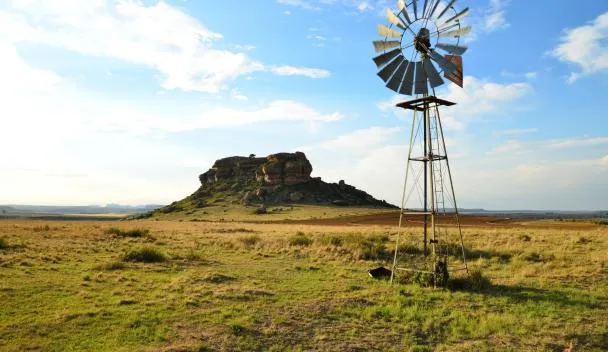
Plaashekke en windpompe verskil van plek tot plek, plaas tot plaas en huis tot huis. Beide was vertroulinge vir jonk en oud in die ou dae. Kinders was altyd in hul noppies om die hekke oop en toe te maak. Daarteenoor, was windpompe die Boer se lewensaar en handlanger en kon water diep uit die boeg van die aarde trek vir water en oorlewing. Water is belangrik vir kleiner damme of die natmaak van groentes en ander gewasse. Windpompe het altyd vriendelik vanaf plase mense van buite verwelkom. Die situasie het so effens met die jare aangepas.

*
Die ou plaashekke van ouds was simbole van respek en privaat eiendom. Dieselfde hek en omstandighede van destyds, bied vandag en veral na 1994, geen beveiliging vir enige Boer of familielede nie.
Jare gelede was die sluit van hekke ‘n teken van privaat eiendom vir ongewenstes en om die nodige respek te toon. Met die miljoene immigrante en ander wat oral rondbeweeg vir kriminele dade, is die plaashek vandag betekenisloos. Daar word of oorgeklim of flenters gery. In die ou dae as daar roes intree, is dit behandel. Vandag vergaan alles rondom ons, nie net weens roes nie, maar daar is geen dissipline, respek of gesag nie.
Alles het verander na 1994, nes wetgewing verander het om by kommuniste en sindikate aan te pas, sodat hulle inkomstes uit die Boere en ander blankes se besighede kan genereer. Sindikate en misdadigers, moordenaars en terroriste gebruik juis die steel van enige eetbare produkte en vee of pluimvee, teen die Boere volk, vir hul eieselfverryking.

*
Daar word opgemerk daar is geen of min respek vir ander se eiendom, want hul toon geen selfrespek nie. Daarom word alles geplunder en afgebreek. Hulle respekteer niemand se privaat eiendom of hul woning, besighede en persone as sulks nie. Veiligheid kan nie slegs op respek gebou word nie. Die regering en hul ondersteuners het geen gesag of mag oor die sindikate en misdadigers nie, omdat hul bevoordeel word daardeur.
Die beveiliging is krities belangrik vir enige boerderye, besigheid, hetsy op die platteland of in stede, hier of elders anders. Die regering wat die misdaad sindikate toelaat, gaan niks vir ons as Boere volk of enige ander blanke doen nie. Hulle gaan ook nie swart bemagtiging of regstellende aksie verwyder nie, omdat hulle voordeel daaruit trek. Ons moet self opstaan en ons eie lewens en besighede beveilig. Die vorige regering het die Boere volk ook nie beveilig nie, behalwe dat daar wel kommando’s landwyd sowel as toepaslike wetgewing was, wat ‘n groot rol in beveiliging gespeel het. Dit is egter nie nou 1970 nie.
*
DIE BOERE VOLK SE LEWENSAAR – VRYHEID, WATER EN LEWE
Sonder hierdie belangrike skakel in meeste Boere se lewens kon daar nie water gewees het vir huis en haard nie. Die klank van hierdie windpompe het Boere se lewensgehalte vergemaklik en die van plaasdiere nog meer beïnvloed. Die windpomp is meer as wat mens dink, hulle was en is steeds deel van ons voortbestaan. Sommige het selfs name in die verlede gehad.
https://www.youtube.com/watch?v=6CL_RMWWqr0
Maak gerus ‘n draai as daar deur die Karoo getoer word by die Loeriefontein se Windpomp museum naby Calvinia.
https://www.sa-venues.com/things-to-do/northerncape/fred-turner-windmill-museum/

James Walton, a leading light in vernacular architecture, was the reason there is a Loeriesfontein windpump museum at all. In 1996, he’d written a series of articles on windpumps for a weekly supplement to Die Burger newspaper, and among them had issued a plea that a museum be set up somewhere to preserve them. Loeriesfontein was the only town to respond, as recorded in his book Windpumps in South Africa, written with the collaboration of Andre Pretorius. Published by Human & Rousseau in 1998, the book was unexpectedly popular and went swiftly out of print.
Windpumps had a massive effect on South Africa’s arid zone. More water – and, later, fences – meant more livestock could be raised on the mostly fertile soils of the Karoo and Kalahari. The Karoo now supplies a third of South Africa’s protein, a quarter of its wool, most of its mohair and an increasing array of crops, from walnuts and pecans to olives and pomegranates.
Life in this arid zone is all about the water. Windpumps are the great matchmakers between the sky, the land and the aquifers beneath it. It is profoundly satisfying to watch them pinwheeling above the veld, the steady spin of the flashing blades driving the rods up and down, cylinders lifting a cupful of liquid at a time, over and over. Maybe it’s also the sound – the metallic sigh of the gears and the creak of the windrose turning into the evening breeze, the soothing whirr of the vanes, the blessing of water splashing into a round dam.
The windpump is a beautiful, functional, life-bringing machine, as mesmerising as a steam locomotive chuffing across the veld. For better or worse, it has changed the fortunes of the Karoo forever.
In the course of a 50-year career, Leon Swanepoel of Carnarvon has worked on nearly every kind of windpump that ever drew water in the country – specifically those around Carnarvon, Brandvlei, Vanwyksvlei, right across to Calvinia, Victoria West, Vosburg, and even Graaff-Reinet. His favourite machine is a Climax for its endurance and dependability, but he respects the others and their quirks. The oldest one he ever tended to was a venerable Defiance Butler Oilomatic, still spinning after more than 70 years.
Trekboer days
The trekboers were subsistence livestock farmers who moved from the Dutch-colonised Cape into the Great Karoo from around 1760 onwards. They competed directly for water and grazing with the indigenous Khoi pastoralists and the nomadic San Bushman hunters. Life in this arid land was a restless business of constant shifting between water-points and rainstorms.
Reliable springs were prized and well-known, which is why so many place-names in the Karoo and Kalahari describe the quality and nature of the water: Modderfontein (Muddy Spring), Soetfontein (Sweet Spring), Bitterfontein (Bitter Spring), Brakdam (Brackish Dam) and Geelvlei (Yellow Marsh).
In these parched lands, farmers dug wells and devised ways to raise groundwater. Some methods were as simple as lowering and lifting a bucket on a rope. Others were a little more complex, involving a wooden roller over a well, cranked to raise a bucket of water at a time.
*
*
PLAASHEKKE
Plaashekke kom al ‘n baie lang tyd saam die Boere volk se geskiedenis. Elke plaashek het ‘n geskiedenis wat families wil en kan onthou. Dit word oorvertel hoe belangrik hekke in die verlede en hede is. Hekke dien as beskerming vir diegene wat op plase of kleinhoewes bly , wat al die vee, pluimvee en ander gewasse insluit. Dit is elke plaasboer se keuse watter tipe hulle omgewing en sak pas.
Plaasboere in die algemeen het weidingskampe of lande waar daar voedsel op groot skaal verbou word. Daar is normaalweg skeiding tussen die dierlike rasse en die plantaardige verbouings. Al hierdie verskillende kampe sal ook oor hekke beskik.
Selfs besighede en dorpshuise vandag het almal ander tipe van ‘hekke’ en kan daar nie net vrylik ingegaan word soos dit jan publiek pas nie.
*
The Van Schoor gates
The good old steel farm gates have been a part of farming for decades, and any farmer worth their veldskoene knows that a good farm gate is more than just a method of protecting their livestock and property. Farm gates can tell the story of the farm they are on, and if your farm has a Van Schoor gate, it may even be an original from 1910, making your farm part of agricultural history in South Africa.
When you are choosing farm gates it is important to take the history of the gates into account. Van Schoor has been manufacturing farm gates since 1910 and it is estimated that up to 60 percent of the farm gates in the Western Cape have come from this factory in small town of Philadelphia.
In the late 1800’s Cornelius van Schoor and his sons ran a successful cartwright and farrier shop in Stellenbosch. During 1910 Marthinus Johannes van Schoor started his own blacksmith shop in Philadelphia, to offer repairs to wagon wheels, horseshoes and horse shoeing services, and other important blacksmithing services. This was equally as successful as the cartwright and farrier business.
Older farm gates can tell you when the farm was built or secured, and can even be used to see where animals were once farmed and kept. This can help to see where the best section of your farm is for livestock, as the farm gates will have been placed there to keep animals protected. An old farm gate can also tell you how people farmed in the days gone by and how well looked after the farmland was.
The nostalgia of farm gates also extends to the families who live on the farm and who have lived there for generations. They bring back memories of when the fencing and gates were first placed around the land, securing the farm at the start of its journey and can remind people of their childhood days spent exploring the farm and its surroundings.
https://www.vanschoorgate.co.za/the-history-and-nostalgia-of-farm-gates/
*
Contact Admin:
Admin kan gekontak word by
volksvryheid9@gmail.com
*

 ONAFHANKLIK