*
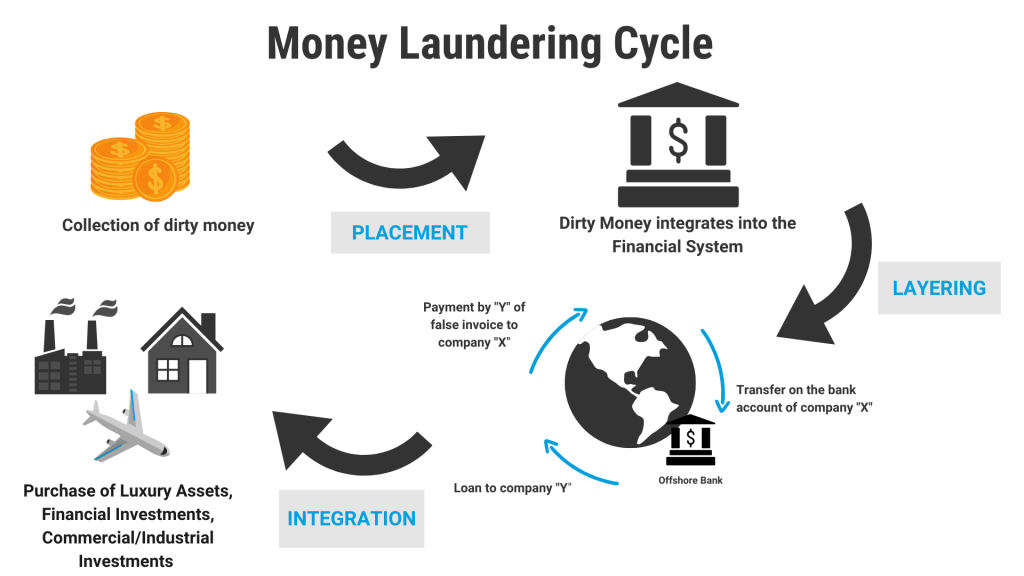
Spookgeld is vuil geld en diefstal, niks anders as geldwassery nie, want groot bedrae geld word al vir jare uitbetaal en die amptenare in beheer, laat dit toe, saam finansiële instellings en selfs oudits wat gedoen word. . Geldwassery is die onwettige proses om groot bedrae geld wat deur kriminele aktiwiteite (soos dwelmsmokkelary, korrupsie of afpersing) gegenereer word, te laat lyk asof dit van ‘n wettige bron afkomstig is. Spookgeld is nie ‘n wettige bron nie nes smokkelary. Hulle omseil belastings en steel dus uit die staatskas uit.

*
Dit laat misdadigers toe om hul “vuil geld” skoon te maak en dit te gebruik sonder om die agterdog van wetstoepassing te wek. ‘n Komplekse reeks deurlopende finansiële transaksies en boekhou-truuks wat ontwerp is om die geld van sy onwettige bron te distansieer en die ouditspoor te verwar is diefstal en korrupsie. Die laaste fase waar die “gewasde” geld weer in die ekonomie ingebring en infaseer word en heeltemal wettig voorkom deur beleggings, vaste eiendom of sakeondernemings.
*
Daar is soveel vlakke van regerings, staatsentiteite en besighede wat misdadigers huisves – hulle word nie gevang nie of minder vervolg soos dit hoort
Die vraag is – wie sit agter die vals vlag spookwerkers en dit is nie net in die regering of staatsdepartemente nie, maar ook in staatsentiteite. Hulle wat ontvang en die toesighouers, steel direk uit die staatskas, dit wil sê van die BELASTINGbetalers. Diegene agter die sogenaamde spookwerkers is binne daardie verskillende groeperings se binnekringe om geld te in bankrekenings in te stort – dit is steel. Dit is nie die ‘spoke’ wat die verantwoordelike ‘persoon’ is nie, maar diegene daaragter.
Dit sluit ook die betrokke finansiële instellings in wat maar te gewillig is om van hierdie spookkliente onder hulle dak te huisves en behulpsaam te wees. Daar is regdeur die spektrum ouditering betrokke, vanuit ‘n bank sowel werksomgewing. Diegene wat dit aan die anderkant ontvang en trek moet ook rekenskap gee as dit getrek of verwyder word. Hierdie geld word ook nie belas as ekstra inkomste vir wie ookal nie, dit wil së geld word verwissel en belastings word gesteel.
Hulle is bedrieglike of nie-bestaande individue wat op betaalstate gehou word, ‘n belangrike vorm van sistemiese korrupsie. Tegnologies en op interne vlakke is dit nie net 1 knoppie wat gedruk word na ‘n bank toe nie. Die skep van rekenings sluit interne infrastrukture (skuldiges) in, wat ook dit met finansiële instellings bespreek en rekenings oopmaak. Waar is die ouditering van daardie ongemagtigde salarisse en finansiële bestuurders, uitvoerende hoofde of wat ook al? Hulle is gekoppel aan regte bankrekeninge wat deur kriminele sindikate beheer word en kos die Suid-Afrikaanse openbare beursie miljarde rande en selfs meer, jaarliks, wat al dekades lank aan die gang is.
*
Nasionale Fiskus-impak:
Betaalstaatbedrog kos die regering na raming R3.9 miljard elke jaar.
Staatsdepartement-anomalieë:
Vroeë oudits het kommerwekkende onreëlmatighede uitgelig, insluitend veelvuldige toelaes wat aan enkellopende individue gaan, betalings aan minderjariges en duplikaat ID-nommers.
PRASA se “Projek Ziveze”:
‘n Mylpaalondersoek na die Passasierspooragentskap van Suid-Afrika (PRASA) het ongeveer 3 000 spookwerkers uitgelig. Toe die verifikasieproses van stapel gestuur is, het meer as 1 100 van hierdie “werknemers” in ‘n enkele dag van die betaalstaat verdwyn, wat die agentskap R200 miljoen in bedrieglike salarisse bespaar het.
Provinsiale sake:
Ander noemenswaardige voorvalle sluit in die vries van salarisse van Gauteng se Departement van Gesondheid vir 230 onverifieerbare werknemers, en die Departement van Onderwys in Mpumalanga wat meer as R28 miljoen in verdagte salarisoorbetalings aangeteken het.
Verpligte verifikasies:
Die Portefeuljekomitee oor Openbare Diens en Administrasie het alle departemente verplig om streng, persoonlike verifikasies van hul personeel uit te voer. Dit het meer as 4 000 “verdagte” werknemers op nasionale en provinsiale vlakke aan die lig gebring.
Biometriese platform vir Binnelandse Sake:
Om manuele manipulasie uit te skakel, het die Departement van Binnelandse Sake en die Nasionale Tesourie ‘n intydse, digitale werknemerverifikasieplatform bekendgestel. Hierdie stelsel bestry betaalstaatbedrog deur gesigsooreenstemming, lewensduurtoetse en kruiskontroles teen die Nasionale Bevolkingsregister te gebruik.
Regs- en Dissiplinêre Stappe:
Die regering het begin om onwettige salarisse en pensioenbydraes terug te eis. Die Spesiale Ondersoekeenheid (SOE) is diep betrokke by die vervolging van individue, aangesien hierdie operasies wyd beskou word as georkestreerde witboordjiemisdaad waarby oneerlike insiders betrokke is.
*
Ghost money is dirty money and theft, nothing more than money laundering, because large amounts of money have been paid out for years and the officials in charge, allow it, along with financial institutions. Money laundering is the illegal process of making large amounts of money generated by criminal activities (such as drug trafficking, corruption or extortion) appear to come from a legitimate source. Ghost money is not a legitimate source like smuggling. It allows criminals to clean their “dirty money” and use it without arousing the suspicion of law enforcement. A complex series of ongoing financial transactions and accounting tricks designed to distance the money from its illegal source and confuse the audit trail is theft and corruption. The final stage where the “laundered” money is reintroduced and phased into the economy and appears completely legitimate through investments, real estate or business ventures.
*
ANC is in charge and very important people like B-BBEE are in charge of this ghost miners.
The question is – who is behind the ghost workers that received ghost money too in ghost accounts. Government is not alone, but also state entities are also involved. They are stealing directly from the state coffers, that means from the TAX payers. Those behind the ghost workers are within those different groupings inner circles to steal money, working together with financial institutions.
Behind this ghost are a person or ten. It is not the ‘ghosts’ that are the responsible ‘person’, but those behind it. They are fraudulent or non-existent individuals kept on payrolls, a major form of systemic corruption. Where are the auditing of those salaries and financial managers, ceo’s or whatever. They are linked to real bank accounts controlled by criminal syndicates and cost the South African public purse billions of rand annually, that is ongoing for decades.
This also includes the financial institutions involved who are only too willing to help these ghost clients. There is auditing involved across the spectrum. It is not just a one button press or transaction. Those who receive and withdraw it on the other side must also be held accountable if it is withdrawn or removed. This money is also not taxed as extra income for anyone, meaning money is being exchanged and taxes are being stolen.
*
National Fiscus Impact:
Payroll fraud costs the government an estimated R3.9 billion each year.
State Department Anomalies:
Early audits have flagged alarming irregularities, including multiple allowances going to single individuals, payments made to minors, and duplicate ID numbers.
PRASA’s “Project Ziveze”:
A landmark investigation into the Passenger Rail Agency of South Africa (PRASA) flagged around 3,000 ghost workers. When the verification process was launched, over 1,100 of these “employees” vanished from the payroll in a single day, saving the agency R200 million in fraudulent salaries.
Provincial Cases:
Other notable incidents include Gauteng’s Department of Health freezing salaries for 230 unverifiable employees, and the Mpumalanga Department of Education recording over R28 million in suspicious salary overpayments.
Mandatory Verifications:
The Portfolio Committee on Public Service and Administration mandated all departments to conduct rigorous, in-person verifications of their staff. This uncovered over 4,000 “suspicious” employees across national and provincial levels.
Home Affairs Biometric Platform:
To eliminate manual manipulation, the Department of Home Affairs and National Treasury launched a real-time, digital employee verification platform. This system combats payroll fraud by utilizing facial matching, liveness tests, and cross-checks against the National Population Register.
Legal and Disciplinary Action:
The government has begun clawing back illicit salaries and pension contributions. The Special Investigating Unit (SIU) is deeply involved in prosecuting individuals, as these operations are widely viewed as orchestrated, white-collar crime involving dishonest insiders
*
THERE ARE MORE CORRUPTION – B-BBEE’S KNOW HOW
Reported on 18 May 2026
The Department of Employment and Labour has welcomed the arrest of three suspects in Mpumalanga in connection with an alleged R27 million COVID-19 Temporary Employer-Employee Relief Scheme (TERS) fraud involving more than 700 ghost employees.
The suspects, including a construction company director, his spouse, and a relative, allegedly misused the TERS system by claiming benefits for fictitious employees. This resulted in an estimated loss of over R26.9 million to the Unemployment Insurance Fund, which administers TERS on behalf of the Department.
*
https://www.labour.gov.za/Media-Desk/Media-Statements/Pages/Department-of-Employment-and-Labour-commends-Hawks-for-arrests-In-R27-Million-TERS-Fraud-Scheme.aspx
https://www.corruptionwatch.org.za/government-tender-fraud-who-takes-the-rap/
https://www.parliament.gov.za/press-releases/media-alert-public-service-committee-receive-briefing-reforms-eliminate-ghost-workers-public-service
https://www.sabcnews.com/sabcnews/over-4000-suspected-ghost-workers-identified-among-govt-employees/
https://www.da.org.za/2026/05/da-minister-champions-cutting-edge-reform-to-eliminate-ghost-workers
https://www.unodc.org/unodc/en/money-laundering/overview.html
WHERE IS THE MINISTERS?
Various municipalities and their ghost workers – B-BBEE officials – lack of management and audits
https://briefly.co.za/people/244659-department-public-works-loses-r147-million-a-year-ghost-workers/
By late 2022, investigators found that 1480 employees could not be verified, while another 1000 resigned during the process.
https://journals.co.za/doi/10.10520/ejc-servamus_v118_n11_a8
*
ALL MONEYS MUST BE RECOVERED ………
WHAT ABOUT ALL THE GHOST WORKERS OF THE PAST 30 YEARS?
WERE THE MONEY BE RECOVERED?
*
CORRUPTION SCANDEL
Ghost employees are workers who appear on payroll systems but allegedly do not exist or do not perform any work.
Every year, governments and public institutions around the world lose millions to payroll fraud, but how serious is the problem in South Africa?
*
Contact Admin:
Admin kan gekontak word by
volksvryheid9@gmail.com
*


