*
Die Groot Teater van Epidaurus is ongeveer 40 km oos van Nafplio en ongeveer 10 km wes van Palaia Epidaurus geleë. Dit is op die terrein van die ” Sanctuary of Asclepius by Epidaurus “. Hierdie teater het ‘n uitsonderlike akoestiek en klankgehalte het oor ‘n bestek van 2 500 jaar die aanbidding van Asclepius, die vervaardiging van Griekse tragedies en die genot van moderne konserte aangebied. Griekeland is trots op so ‘n ou antieke teater en wat daar afgespeel het en waar medisyne ontstaan het.

*
Dit is gebou deur Pausanius, ‘n rondreisende geograaf uit die tweede eeu nC wat in hedendaagse Turkye gebore is, is deur Polyclitus, die Jongere van Argos geïdentifiseer as die ontwerper en bouer van die Epidaurus-teater. Die werk is omstreeks 330 vC voltooi.
Die geskiedenis van die Peloponnesos sluit ‘n verhaal van langtermyn-antagonisme en militêre konflik tussen die Argos en Sparta in, met Sparta wat dikwels oorwin. Sparta het uiteindelik in 371 vC geval vir Thebe wat deur Argos ondersteun is, en weer in 362 vC. Masedonië het in 359 vC ontstaan toe Filips II koning geword het. Phillip II se dood is gevolg deur die begin van die vinnige hemelvaart van Alexander die Grote in 336 vC. Die bou van die Epidaurus-teater is dus deur Argos beïnvloed ná die ondergang van Sparta en tydens die bewind van die Masedoniërs. Hierdie gebeure het bygedra tot die lewensvatbaarheid van die Teater by Epidaurus.
’n Vooraanstaande 19de-eeuse Griekse argeoloog, Panagís Kavadías, was geïntrigeerd deur Pausanias se aanhaling. Hy het die moontlikheid nagejaag dat die Teater by Epidaurus steeds bestaan en na ses jaar se opgrawings is die teater in 1881 ontbloot. Die struktuur is oor die jare deur meer as 6 meter grond beskerm en het dus in ‘n uitstekende toestand gebly. Dit het aan navorsers uiters waardevolle argeologiese inligting verskaf oor die insig van die antieke Grieke ten opsigte van konstruksie, ontwerp en argitektuur, materiale, meetkunde en akoestiek. Akoestiek van die teater word beskryf as meesterlike werk.

Gebruike:
Die Teater van Epidaurus is hoofsaaklik gebruik om die genesingsdoelwitte van die Heiligdom van Asclepius te ondersteun. Antieke Griekse medisyne was holisties. Die gebruik van medisyne is geïntegreer in ‘n godsdienstige omgewing wat die smeking van gode om genesing van liggaam en gees beklemtoon het. Hierdie doelwitte het ‘n magdom idees bevorder wat uitdrukking gekry het wat verband hou met dood en wedergeboorte. In hierdie opsig het die Teater van Epidaurus musiek en toneelstukke verskaf om kalmerende en afleidende ervarings te bied. Gevolglik was die kwaliteit van die klank by die Epidaurus-teater, en dus die bou van die Epidaurus-teater en sy akoestiek, belangrik vir hul uitdrukking en die volle genesing.
Die teater het ook gedien as die sentrum waarom die kultus van Asclepius feeste gereël het om hul god te eer. Hierdie feeste het atletiese speletjies en musiek- en dramakompetisies ingesluit. Seremonies wat dieper in die kultus gewortel is, het ook by die teater plaasgevind.
Die Teater van Epidaurus het dus ‘n belangrike bydraer tot die vooruitgang van die Griekse kunste geword. Dit is bereik deur die produksie en aanbieding by die teater van drama, toneelstukke en voordragte.
Die bevolking in die nabygeleë antieke stad Palaia Epidavros (Epidaurus) het moontlik bykomende moontlike gebruike van die Teater van Epidaurus beïnvloed. Hierdie klein kusstadstaat, net 16 kilometer oos geleë, het sy eie Klein Teater vanaf die middel van die 4de eeu vC gehad. Palaia Epidaurus het ook ‘n tempel vir Dionysius gehad en die aanbidding van Dionysus is ongetwyfeld by hul stad se teater bevorder.
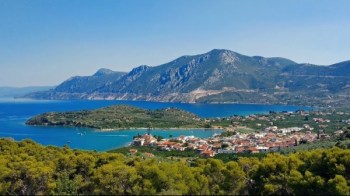
Die Klassieke en Hellenistiese uitbeelding van Dionisius was van ‘n vroulike jeug wat ‘n tros druiwe vashou, af en toe dronk. Dionysus is in die vorige geskiedenis as die God van Wyn, Vrugbaarheid, Teater en Godsdienstige Ekstase gevier. Hierdie byeenkomste is geassosieer met gemeenskapsfeeste en feeste wat verband hou met die wingerd-insameling en vrugbaarheidsvieringe. Die konstruksie van die teater met groter kapasiteit by die Heiligdom van Asklepius het moontlik ‘n fokus op ‘n ander styl van viering meegebring.
*
Epidaurus
*
ONTWERP
Die basiese beginsels van die ontwerp en konstruksie van die antieke Teater by Epidaurus is maklik identifiseerbaar as gevolg van sy uitstekende fisiese toestand. Die teater bestaan uit drie primêre kenmerke van die argitektuur van Griekse teaters van die tydperk; die orkes, skene en cavea. Hierdie kenmerke word gedeel met die oudste van die Griekse teaters, die Teater van Dionysus, in Athene.
Die Orkes
Die orkes soos in die beeld geïdentifiseer is die plat, sirkelvormige vloerspasie wat 20 meter in deursnee is. Griekse tragedies en toneelstukke het dikwels ‘n koor van tussen 10 en 20 persone gehad. Die koor en ander kunstenaars soos musikante het die orkes beset. ‘n Plat strook marmer versier die orkes se omtrek. Die orkes se vloer is nie kalksteen of marmer nie, maar saamgeperste aarde.
Die uitstekende toestand van die kalksteen- en marmerteater van Epidaurus

The excellent condition of the limestone and marble Theatre of Epidaurus
Die Skene
Agter die orkes word die fondamente van die skene gevind, ‘n area wat ontwerp is vir toneelbou, uitvoering en berging. Die skene was reghoekig en gemaak van ‘n sagter graad kalksteen. Die skene het die breedte van die teater, agter die orkes, uitgebrei. Kleiner vertrekke aan beide kante van die skele het as kleedkamers en vir berging gedien. In die klassieke era is die grondvlak-area voor die skene vir toneelspel gebruik. Die skene is ook gebruik om geverfde natuurskoon te ondersteun om die tema van die toneelstuk aan te vul.
In die Hellenistiese tydperk is ‘n verhoogde platform genaamd ‘n ‘proscenium’ voor die skene geïnstalleer sodat die akteurs verhewe sou wees voor die gehoor. Die Skene van die Teater by Epidaurus word op 7,60 meter geskat. Skenes het in die tweede eeu vC toenemend uitgebrei en meerverdieping geword, sodat die proscenium ook natuurskoon gedra het.
Die Cavea
Voor die orkes is die rye sitplekke te sien (cavea; Lat: ouditorium). Die sitplekke is oorspronklik van ‘n geharde graad kalksteen gemaak. Die rye was eenvormig gerangskik loodreg op die trappe wat die kliënte na die boonste vlakke geneem het.
Die Epidaurus-teater is ontwerp om sosiale oorwegings, soos status, te akkommodeer. Die onderste gedeelte van die ouditorium is van die boonste gedeelte gedeel deur ‘n horisontale loopbrug, die ‘diazoma’. Die sitplek onder die diazoma was beskikbaar vir beskermhere van hoër sosiale aansien. Hierdie area het uit 34 rye bestaan wat deur 13 vertikale stelle trappe in 12 wigvormige afdelings verdeel is. Die erestoele in die onderste ry is van kliprugleunings voorsien.
Die sitplek bo die diazoma het 20 rye sitplekke bestaan wat in 22 wigvormige afdelings geskei is deur 23 vertikale stelle trappe.
Die monumentale toegangsweë na die kante van die Teater by Epidaurus het toegang tot die teater gebied. Die ontwerp en rangskikking van die sitplekke is ‘n belangrike akoestiese element van die teater en dus die klank wat dit uitstuur.
Waarom lewer die akoestiek by die antieke teater van Epidaurus kwaliteitklank
Daar is ‘n verskil tussen klanke en akoestiek.
Klanke word geproduseer deur die vibrasies van ‘n bron. Die energie van daardie vibrasies word deur die medium voortgeplant as variasies in druk. Die molekules in die medium reageer op die variasies in druk deur om hul gemiddelde posisie te vibreer. Ons ore bespeur hierdie variasies en kodeer dit as klank.
Die kwaliteit van die klank wat ons hoor hang baie af van die kwaliteit van die bron daarvan. Maar daar is ander faktore wat die klank wat ons hoor sal verander. Hierdie faktore vorm die akoestiek. Akoestiek is die term wat gegee word aan die relevante kenmerke van die ruimte wat die klank oordra.
Die pragtige Epidaurus-teater word wêreldwyd erken vir sy klank en akoestiek. Selfs vandag bied dit televisiekonserte en optredes aan. Die teater bevorder verwondering oor hoe die ou mense ten tyde van sy konstruksie die beginsels van akoestiek verstaan het wat ons vandag as modern beskou. Dit kan 100% getoets word. Dit is merkwaardig dat hierdie klanke in sotto voce so doeltreffend oorgedra kan word.
Hier is dus ‘n paar basiese ontwerpwaarnemings oor die Teater by Epidaurus wat bydra tot die akoestiek. Ons gebruik nie meer as ons eie kennis van die golf eienskappe van klank vir ons ongeskrapte verduidelikings nie.
Klanke. Die effek kan eenvoudig gemodelleer word deur ‘n klip in ‘n stil dam te laat val. Ons het dit almal gedoen en gesien hoe die konsentriese watergolwe energie oordra van waar ons die klip laat val het – die bron. Daar moet kennis geneem word dat dit die energie is wat oorgedra word en nie die water nie.
Die sitplekgeometrie van die Epidaurus-teater het ook belangrike implikasies vir die belyning van die beskermheer, hetsy 2300 jaar gelede of nou. Sou ‘n beskermheer direk na die middel van die orkes sit, sal die beskermheer korrek in lyn wees vir gehoor.
Nog ‘n kenmerk van die ontwerp van die Teater van Epidaurus is die steilte van die trappe as jy jou pad op na die boonste rye maak. Dit is moeilik om hierdie een te mis! Hierdie aspek van ontwerp is om die tirannie van afstand te verminder. Die intensiteit van klank val af met afstand van die bron deur die omgekeerde vierkantwet. Dit is redelik vinnig.
Die steilheid van die sitplek sal die verlies aan intensiteit by die boonste vlak beperk deur die afstand wat die klank sou moes aflê te verminder in vergelyking met die situasie as die struktuur ‘n plat, reghoekige ouditorium was. En as die spreker sy kop oplig wanneer hy praat, dan sal die klank waarskynlik die beskermheer in die boonste rye bereik sonder dat dit fisies belemmer word.
*
Epidaurus teater
*
The Great Theatre of Epidaurus is located approximately 40 kms east of Nafplio and approximately 10 kms west of Palaia Epidaurus. It is within the grounds of The Sanctuary of Asclepius at Epidaurus.
The Theatre of Epidaurus and its exceptional acoustics and sound quality has hosted over a span of 2,500 years the worship of Asclepius, the production of Greek tragedies and the enjoyment of modern concerts.
Build by: Pausanius, an itinerant second Century AD geographer born in modern-day Turkey, identified Polyclitus the Younger from Argos as the designer and builder of the Epidaurus theatre. The work was completed about 330 BC.
The history of the Peloponnese includes a narrative of long term antagonism and military conflict between Argos and Sparta, with Sparta often victorious. Sparta finally fell in 371 BC to Thebes who was supported by Argos, and again in 362 BC. Macedon emerged in 359 BC when Phillip II became king. Phillip II’s death was followed by the beginning of the rapid ascension of Alexander the Great in 336 BC. The construction of the Epidaurus theatre was therefore influenced by Argos following the demise of Sparta and during the reign of the Macedons. Did these events contribute to the viability of the Theatre at Epidaurus?
A prominent 19th century Greek archaeologist, Panagís Kavadías, was intrigued by Pausanias’ quotation. He pursued the possibility that Theatre at Epidaurus still existed and following six years of excavation exposed the theatre in 1881. The structure had been protected over the years by more that 6 metres of soil and so remained in excellent condition. This has provided researchers with extremely valuable archaeological information about the insight of the ancient Greeks in respect of construction, design and architecture, materials, geometry and acoustics.
Used for:
The Theatre of Epidaurus was used predominantly to support the healing goals of the Sanctuary of Asclepius. Ancient Greek medicine was holistic. The consumption of medicines was integrated within a religious environment that accentuated the beseeching of gods for cures of body and mind. These goals promoted a host of ideas that were given expression that related to death and regeneration. In this respect the Theatre of Epidaurus provided music and plays to offer calming and distracting experiences. Consequently, the quality of the sound at the Epidaurus theatre, and hence the construction of the Epidaurus theatre and its a acoustics, was important to their expression.
The theatre also served as the centre around which the cult of Asclepius organised festivals to honour their god. These festivals included athletic games, and musical and drama contests. Ceremonies more deeply rooted within the cult also took place at the theatre.
The Theatre of Epidaurus therefore became an important contributor to the progress of Greek arts. This was achieved through the production and presentation at the theatre of drama, plays and recitals.
The population at the nearby ancient city of Palaia Epidaurus may have influenced additional possible uses of the Theatre of Epidaurus. This minor coastal city-state, located just 16 kilometres to the east, had its own Little Theatre from the mid-4th Century BC. Palaia Epidaurus also had a temple to Dionysius and the worship of Dionysus was no doubt promoted at their city’s theatre. The Classical and Hellenistic depiction of Dionysius was of an effeminate youth holding a bunch of grapes, occasionally drunk. Dionysus was celebrated in prior history as the God of Wine, Fertility, Theatre and Religious Ecstasy. These gatherings were associated with community festivities and feasts associated with the vine-gathering and fertility celebrations. The construction of the larger capacity theatre at the Sanctuary of Asclepius may have brought with it a focus on a different style of celebration.
DESIGN
The basics of the design and construction of the ancient Theatre at Epidaurus are readily identifiable due to its excellent physical condition. The theatre comprises three primary characteristics of the architecture of Greek theatres of the period; the orchestra, skene and cavea. These features are shared with the oldest of the Greek theatres, the Theatre of Dionysus, in Athens.
The Orchestra
The orchestra as identified in the image is the flat, circular floor space which is 20 metres in diameter. Greek tragedies and plays often featured a chorus of between 10 and 20 personnel. The chorus and other performers such as musicians occupied the orchestra. When you visit you will see a flat strip of marble that decorates the orchestra’s perimeter. It can just be made out in the image. The orchestra’s floor isn’t limestone or marble, but compressed earth. Can you infer why earth was used? You will also be able to locate the eroded marble or limestone remains of the altar base, or thymele, at the centre of the orchestra.
The Skene
Behind the orchestra you will find the eroded foundations of the skene, an area designed for scene building, performance and storage. The skene was rectangular and constructed from a softer grade of limestone. The skene extended the width of the theatre, behind the orchestra. Smaller rooms at both ends of the skene served as change rooms and for storage. In the classical era the ground-level area in front of the skene was used for acting. The skene was also used to support painted scenery to complement the theme of the play.
In the Hellenistic period a raised platform called a proscenium was installed in front of the skene so the actors would be elevated in front of the audience. The skene of the Theatre at Epidaurus was estimated as 7.60 metres. Skenes became increasingly elaborate and multi-storied in the second century BC such that the proscenium also carried scenery. Our post describing the Theatre of Dionysus in Athens has an image of the proscenium.
The Cavea
In front of the orchestra you will see the rows of seats (cavea; Lat: auditorium). The seats were originally made from a hardened grade of limestone. The rows were uniformly arranged perpendicularly to the steps that took the patrons to the upper tiers.
The Epidaurus theatre was designed to accommodate social considerations, such as status. The lower section of the auditorium was divided from the upper section by a horizontal walkway, the diazoma. The seating below the diazoma was available for patrons of higher social standing. This area comprised 34 rows which were divided into 12 wedge-shaped sections by 13 vertical sets of steps. The seats of honour in the lowest row were provided with stone backrests.
The seating above the diazoma comprised 20 rows of seats separated into 22 wedge-shaped sections by 23 vertical sets of steps.
The monumental entrance ways to the sides of the Theatre at Epidaurus provided access into the theatre. The design and arrangement of the seats is an important acoustical element of the theatre and therefore the sound it transmits. Should you visit the Little Theatre at Palaia Epidaurus you will see the same design except less attention was shown to seat construction due to the smaller distance over which voices needed to be heard. Read about it at Palaia (Ancient) Epidaurus and its Little Theatre
Why is the Acoustics at the Ancient Theatre of Epidaurus Produce Quality Sound
There is a difference between sounds and acoustics. Sounds are produced by the vibrations of a source. The energy of those vibrations is propagated through the medium as variations in pressure. The molecules in the medium respond to the variations in pressure by vibrating about their average position. Our ears detect these variations and code them as sound.
The quality of the sound we hear very much depends on the quality of its source. But there are other factors that will modify the sound we hear. These factors make up the acoustics. Acoustics is the term given to the relevant characteristics of the space that transmits the sound.
The beautiful Epidaurus Theatre is recognised globally for its sound and acoustics. Even today it hosts televised concerts and performances. The theatre promotes wonder as to how the ancients at the time of its construction understood the principles of acoustics that we today consider modern. When you visit you will no doubt repeat what we all do – stand in the middle of the orchestra and sing, recite (usually something silly), or test the acoustics at Epidaurus by whispering, gradually increasing your volume until your voice is recognised by your partner sitting in the top tiers. It is remarkable that these sounds in sotto voce can be so efficiently transmitted.
So here are a few basic design observations about the Theatre at Epidaurus that contribute to the acoustics. We are using no more than our own knowledge of the wave properties of sound for our unscraped explanations.
The image above suggests a fundamental advantage. Sound emanates from a point source as spherical wave fronts. So what does that mean? The effect can be modelled simply by dropping a stone into a still pond. We’ve all done it and have seen the concentric water waves transfer energy away from where we dropped the stone – the source. It should be noted that it is the energy that is being transferred and not the water. You can almost imagine dropping an imaginary stone into the ‘watery’ orchestra.
We can apply this model to the sound at the Theatre at Epidaurus. Replace the dropping of the stone with a source of sound such as a player’s mouth and substitute the water waves with sound waves. The ‘circular’ geometry of the sound will fit the circular geometry of the rows of seating. Every person in the audience seated in the same row will be the same distance from the source and will enjoy the same intensity of the sound.
The seating geometry of the Epidaurus theatre also has important implications for the alignment of the patron, whether 2300 years ago or now. Should a patron sit directly facing the centre of the orchestra then the patron will be correctly aligned for hearing. Try it. Sit on a seat squarely facing the centre of the orchestra. Assess the sound. Now change your posture so that your head no longer faces the orchestra. Could you detect a change in your hearing?
Another feature of the design of the Theatre of Epidaurus is the steepness of the steps as you make your way up to the top rows. It’s hard to miss this one! This aspect of design is to reduce the tyranny of distance. The intensity of sound falls off with distance from the source by the inverse square law. That’s pretty rapid.
The steepness of the seating would limit the loss of intensity at the top tier by reducing the distance the sound would have to travel compared to the situation if the structure were a flat, rectangular auditorium. And if the speaker raised his head when he spoke, then there would be likely that the sound would reach the patron in the upper rows without its being physically impeded. Give it a go! Speak down into the front rows and then left your head up and speak to the top tier. Can your partner discern an appreciable difference in volume and quality?
The seating geometry of the Epidaurus theatre also has important implications for the alignment of the patron, whether 2300 years ago or now. Should a patron sit directly facing the centre of the orchestra then the patron will be correctly aligned for hearing. Try it. Sit on a seat squarely facing the centre of the orchestra. Assess the sound. Now change your posture so that your head no longer faces the orchestra. Could you detect a change in your hearing?
Another feature of the design of the Theatre of Epidaurus is the steepness of the steps as you make your way up to the top rows. It’s hard to miss this one! This aspect of design is to reduce the tyranny of distance. The intensity of sound falls off with distance from the source by the inverse square law. That’s pretty rapid.
The steepness of the seating would limit the loss of intensity at the top tier by reducing the distance the sound would have to travel compared to the situation if the structure were a flat, rectangular auditorium. And if the speaker raised his head when he spoke, then there would be likely that the sound would reach the patron in the upper rows without its being physically impeded. Give it a go! Speak down into the front rows and then left your head up and speak to the top tier. Can your partner discern an appreciable difference in volume and quality?
We performed a quick and dirty calculation when at the Theatre at Epidaurus and the interesting result was that the distance between the rows of seats is about the average wavelength of a spoken monotone! It seems that the dimensions of the inter-row distance were designed to match what was intended to happen there. Did they know? Had they tested it? Or was the architecture and theatre acoustics a fluke? Of course, a spoken performance consists of many wavelengths. However, it could be argued that as the performance would have been achieved over a reasonably narrow bandwidth then the relationship between wavelength and the distance between the rows would be maintained. What do you think?
Limestone and marble seat backs promote reflection at Theatre of Epidaurus

Kalksteen en marmer sitplekke bevorder weerkaatsing by Teater van Epidaurus
*
*
*
HELENDE GAWES EN MEDISYNE
Asklepios at Epidauros in Ancient Greece
UNESCO
Die konsep van genesing in Europa kan teruggevoer word na die Heiligdom van Asclepius by Epidaurus. ‘n Heilige plek wat gebruik is vir seremoniële mediese praktyke so ver terug as die 2de millennium vC, was die terrein ook geassosieer met die kultus van Apollo in die 8ste eeu vC. Dit het ‘n onskatbare bydrae gelewer tot mediese evolusie en vooruitgang. Met verloop van tyd het sy tempels, sportfasiliteite, banketsale en teater in filosofie verskuif van gebed na wetenskap in die evolusie van mediese behandeling.
Epidaurus, wat in 1988 as ‘n UNESCO-wêrelderfenisgebied ingeskryf is, is ‘n unieke argeologiese terrein, met die oorblyfsels van een van die mees volledige Griekse heiligdomme van die antieke wêreld.
https://www.youtube.com/watch?v=rPlRG0OR4Gw
The concept of healing in Europe can be traced back to the Sanctuary of Asclepius at Epidaurus. A sacred place used for ceremonial medical practices as far back as the 2nd millennium BC, the site was also associated with the cult of Apollo in the 8th century BC. It made an invaluable contribution to medical evolution and advancement. Over time, its temples, sporting facilities, banquet halls and theatre shifted in philosophy from prayer to science in the evolution of medical treatment. Inscribed as a UNESCO World Heritage site in 1988, Epidaurus is a one-of-a-kind archaeological site, featuring the remains of one of the most complete Greek sanctuaries of the ancient world.
&
Die Heiligdom van Asklepios by Epidaurus is ‘n fassinerende en ongewone UNESCO-wêrelderfenisgebied in Griekeland. Dit is ‘n antieke heiligdom – ‘n gesondheidstoevlugsoord wat 2500 jaar terug dateer. Antieke Grieke sou hierheen kom om behandel te word en van siekte te herstel, en in sekere opsigte is dit ook die geboorteplek van moderne medisyne.
https://www.youtube.com/watch?v=qIBkF37MCGs
The Sanctuary of Asklepios at Epidaurus is a fascinating and unusual UNESCO World Heritage Site in Greece. It’s an ancient sanctuary – a health retreat, dating back 2500 years. Ancient Greeks would come here to be treated and recover from illness, and in some ways it’s the birthplace of modern medicine as well.
UNESCO
In ‘n klein vallei in die Peloponnesus het die heiligdom van Asklepios, die god van medisyne, ontwikkel uit ‘n veel vroeëre kultus van Apollo (Maleatas), op die laatste gedurende die 6de eeu vC, as die amptelike kultus van die stadstaat Epidaurus . Sy vernaamste monumente, veral die tempel van Asklepios, die Tholos en die Teater – wat as een van die suiwerste meesterstukke van Griekse argitektuur beskou word – dateer uit die 4de eeu. Die uitgestrekte terrein, met sy tempels en hospitaalgeboue wat aan sy genesende gode gewy is, bied waardevolle insig in die genesende kultusse van die Griekse en Romeinse tyd.
Die terrein is een van die mees volledige antieke Griekse heiligdomme van die Oudheid en is betekenisvol vir sy argitektoniese glans en invloed. Die Heiligdom van Epidaurus (met die Teater, die Tempels van Artemis en Asklepios, die Tholos, die Enkoimeterion, die Propylaia, die Banketsaal, die baddens asook die sport- en hospitaalfasiliteite) is ‘n uitstekende voorbeeld van ‘n Helleense argitektoniese ensemble van die 4de eeu vC.
Die vorm van sy geboue het groot invloed op die evolusie van Hellenistiese en Romeinse argitektuur uitgeoefen. Tholos het die ontwikkeling van Griekse en Romeinse argitektuur beïnvloed, veral die Korintiese orde, terwyl die Enkoimeterion stoa en die Propylaia vorme bekendgestel het wat verder ontwikkel het in Hellenistiese argitektuur. Daarbenewens is die ingewikkelde hidrouliese stelsel van die Heiligdom ‘n uitstekende voorbeeld van ‘n grootskaalse watervoorsiening en rioolstelsel wat die betekenisvolle ingenieurskennis van antieke samelewings illustreer. Die pragtig bewaarde Teater word steeds vir antieke drama-opvoerings gebruik en maak die gehoor vertroud met antieke Griekse denke.
*
Bronne en ander inligting
Of Gods and Dreams: The Ancient Healing Sanctuary of Epidaurus
https://whc.unesco.org/en/list/491/
https://www.unesco.org/archives/multimedia/document-970

 ONAFHANKLIK