A lethal worm has recently invaded the North Coast which is causing horrific tumours and has claimed many a dog’s life, North Coast Courier reports. The number of spirocerca cases being seen by vets is dramatically on the rise, according to Ballito Vet’s Dr Louis Gouws. “We saw our first case in 2001 and they were rare and far between until recently. We have probably seen close to 300 cases since then and there has been a steep increase with probably one dog a week coming to us with spirocerca.”

While there are various theories about where this worm comes from, which can be fatal if not caught in the early stages, Dr Gouws said he believes hadeda birds are to blame.
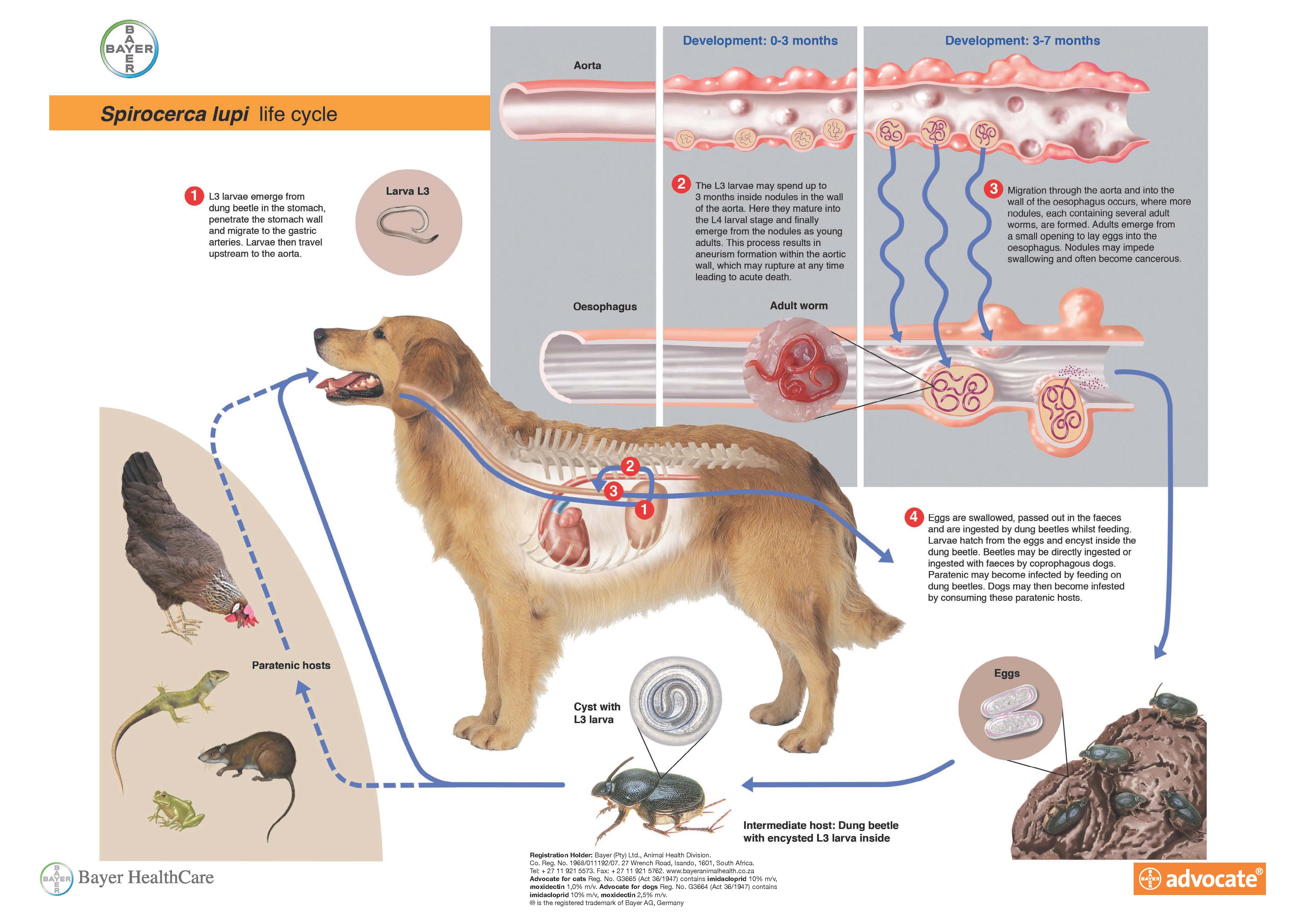
“The theory is that the spirocerca eggs are eaten by small dung beetles that becomes the intermediate host as the eggs survive until it enters into a canine’s body. My theory is that the hadedas eat the dung beetle as they are the only birds that catch them in the ground.
“These eggs survive in the hadeda poop which some dogs think is very tasty. Once the egg is in the dog’s body, the larvae hatch.”
The larvae then travel to the oesophagus where they form tumours or “nests”.
***
Until the worm larvae have reached the aorta there are no symptoms. Once in the aorta, aneurisms (saclike protrusions in the artery wall) may develop that can lead to thrombosis and embolism of the back legs presenting as pain and lameness in the affected limb. These aneurisms may also rupture leading to sudden death in an affected animal.
Inside the wall of the esophagus the constant irritation of the worms on the tissues leads to thickened growths of the wall. (granulomas) The presence of these granulomas cause regurgitation or vomiting in a large number of cases. Regurgitation is a passive backflow of ingested material from the esophagus, whereas vomiting entails the active contraction of the stomach muscles to expel food already in the stomach.
In exceptional cases tumours may develop in the granulomas due to the constant irritation. These tumours are usually malignant and often spread to the lungs. A very interesting phenomenon that rarely follows these tumours is severe thickening of the fore- and hindlegs. (Marie’s disease)

http://www.bergbosvet.co.za/Siektes/spiro_eng.htm
***
SPIROCERCA
Spirocerca Lupi is a worm that completes its life cycle in dogs and causes severe, potentially life threatening diseases. Your fur friend can pick up this worm from eating beetles or small animals such as mice, rats, lizards or birds. These little animals can carry worm larvae which your dog ingests when eating them. The larvae are released into your dog’s digestive tract, after which they move through the intestinal walls and into your dog’s bloodstream. Once in the bloodstream, the worm larvae will migrate through out your dogs body resulting in disease.
Using spot on treatment such as Advocate or deworming using Milbemax tablets on a monthly basis is a fantastic preventative measure. Removing faeces off the lawn regularly will help to reduce the amount of beetles being attracted into the garden, helping you reduce the chance of your dog accidentally ingesting a beetle. These preventative measures can help to safeguard your precious dog not only from the dangers of the Spirocerca Lupi worm but also against the threat of some of the other nasty types of worms.
https://zuki.co.za/blogs/zuki/the-killer-worm-in-south-africa-spirocerca-lupi

 ONAFHANKLIK