A megalith is a large stone that has been used to construct a structure or monument, either alone or together with other stones. The word megalithic describes structures made of such large stones without the use of mortar or concrete, representing periods of prehistory characterised by such constructions. For later periods, the word monolith, with an overlapping meaning, is more likely to be used.

The most concentrated occurrence of dolmens in particular is in a large area on both sides of the Jordan Rift Valley, with greater predominance on the eastern side. They occur first and foremost on the Golan Heights, the Hauran, and in Jordan, which probably has the largest concentration of dolmen in the Middle East

The word megalith comes from the Ancient Greek μέγας (transliteration mégas, meaning “great”) and λίθος (transliteration líthos meaning “stone”). Megalith also denotes one or more rocks hewn in definite shapes for special purposes


***
What Is Their True Purpose…Could It Be Something Totally Bizarre?
***
***
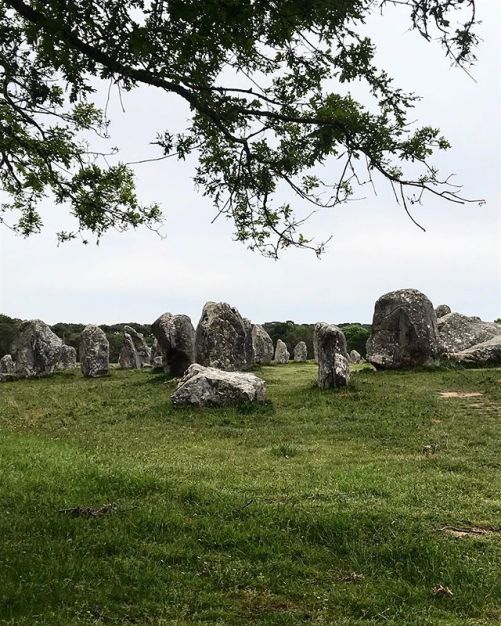
Megalithic grave Harhoog in Keitum, Sylt, Germany

***
In part four of the series Hugh Newman explores the biggest stones at the main temple of Baalbek in Lebanon, and the mighty western and northern walls that contain some of the largest megaliths on the planet. PART 1: https://youtu.be/Z0P3jSOY4-w, PART 2: https://youtu.be/qmFYmFYejd, PART 3: https://youtu.be/vee3g_LGmjc
***
Göbekli Tepe
Nabta Playa was once a large basin in the Nubian Desert, located approximately 800 kilometers south of modern day Cairo or about 100 kilometers west of Abu Simbel in southern Egypt, 22° 32′ north, 30° 42′ east. Today the region is characterized by numerous archaeological sites.
Although at present the western Egyptian desert is totally dry, this was not the case in the past. There is good evidence that there were several humid periods in the past (when up to 500 mm of rain would fall per year) the most recent one during the last interglacial and early last glaciation periods which stretched between 130,000 and 70,000 years ago. During this time, the area was a savanna and supported numerous animals such as extinct buffalo and large giraffes, varieties of antelope and gazelle. Beginning around the 10th millennium BC, this region of the Nubian Desert began to receive more rainfall, filling a lake. Early people may have been attracted to the region due to the source of water.
Archaeological findings may indicate human occupation in the region dating to at least somewhere around the 10th and 8th millennia BC. Fred Wendorf and Christopher Ehret have suggested that the people who occupied this region at that time were early pastoralists, or like the Saami practiced semi-pastoralism (although this is disputed by other sources because the cattle remains found at Nabta have been shown to be morphologically wild in several studies, and nearby Saharan sites such as Uan Afada in Libya were penning wild Barbary sheep, an animal that was never domesticated). The people of that time consumed and stored wild sorghum, and used ceramics adorned by complicated painted patterns created perhaps by using combs made from fish bone and which belong to a general pottery tradition strongly associated with the southern parts of the sahara (e.g., of the Khartoum mesolithic and various contemporary sites in Chad) of that period.

Analysis of human remains by archaeologist Fred Wendorf and reported in “Holocene settlement of the Egyptian Sahara”, based on osteological data suggests a subsaharan origin for the site’s inhabitants. Several scholars also support a Nilo-Saharan linguistic affinity for the Nabta people; including the site’s discoverer, archaeologist Fred Wendorf and the linguist, Christopher Ehret.
By the 7th millennium BC, exceedingly large and organized settlements were found in the region, relying on deep wells for sources of water. Huts were constructed in straight rows. Sustenance included fruit, legumes, millets, sorghum and tubers.
Also in the late 7th millennium BC, but a little later than the time referred to above, imported goats and sheep, apparently from Southwest Asia, appear. Many large hearths also appear.
By the 6th millennium BC, evidence of a prehistoric religion or cult appears, with a number of sacrificed cattle buried in stone-roofed chambers lined with clay. It has been suggested that the associated cattle cult indicated in Nabta Playa marks an early evolution of Ancient Egypt’s Hathor cult.
By the 5th millennium BC these peoples had fashioned one of the world’s earliest known archeoastronomical devices (roughly contemporary to the Goseck circle in Germany and the Mnajdra megalithic temple complex in Malta). Research suggests that it may have been a prehistoric “calendar” marking the summer solstice.
http://www.danel.com.hr/Megalithic%20culture.html

***
Brien Foerster
The Massive Enigmatic Ruins Of Baalbek In Lebanon: A Walk Through The Site
Academics insist that all of the stone work constructions at Baalbek in Lebanon were done by the Romans around 100 AD. However, in this video you will see that the Roman work was done on top of much older megalithic foundations
***

Timeline of megalithic construction
http://www.danel.com.hr/Megalithic%20culture.html
https://en.wikipedia.org/wiki/Megalith
https://stalktr.net/tag/megalites

 ONAFHANKLIK