Coffee is the world’s second most traded commodity, with about half a trillion cups consumed per year. Not only used for brewing a cup of joe, the coffee bean (through decaffeination) provides caffeine for beverages (cola), pharmaceuticals, and cosmetics. There are two main commercially grown types of coffee beans: Arabica, which accounts for 70% of the world’s coffee, and the Robusta bean which is far cheaper and easier to grow.
(black gold)
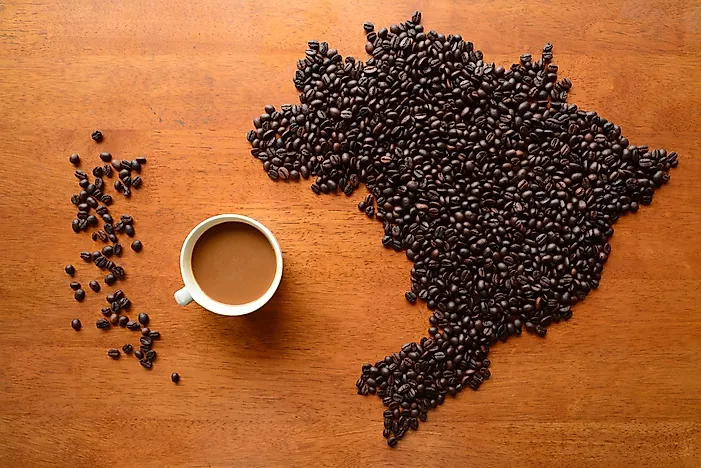
Enjoy thus with your coffee
EG AFRIKAANSE MUSIEK
***
Brazil is the world’s largest coffee producer. In 2016, Brazil produced a staggering 2,595,000 metric tons of coffee beans. It is not a new development, as Brazil has been the highest global producer of coffee beans for over 150 years.
Coffee plantations cover about 27,000 square kilometers of Brazil with the majority located in Minas Gerais, Sao Paulo, and Parana, three southeastern states where the climate and temperature are ideal for coffee production. Brazil also distinguishes itself from other coffee producing nations in that Brazilians process coffee with the dry process (unwashed coffee), where the coffee cherries are dried in the sun rather than washed in a wet process.
Guatemala produced 204,000 metric tons of coffee beans in 2016, and their production numbers have remained fairly consistent over the past few years. Coffee beans are most abundant in Guatemala in years where the temperature hovers between 16 and 32°C, and at altitudes between 500 and 5,000 metres above sea level. Guatemala was Central America’s top producers until it was overtaken by Honduras in 2011.
In 2016, Mexico produced over 234,000 metric tons of coffee beans. The nation predominantly produces high quality Arabica beans grown in the coastal regions near the border of Guatemala. Mexico is responsible for the majority of U.S. coffee imports.
While Uganda may not come to mind when you think of coffee production, it is the Central African nation’s top-earning export with 288,000 metric tons produced in 2016. It has moved past Mexico in 2015 to become the world’s 8th largest producer of coffee. The nation grows both Robusta beans – a crop native to the Kibale forest area – as well as Arabica beans from nearby Ethiopia. Coffee is a vital part of the Ugandan economy, with a large portion of the population working in coffee related industries. Coffee production was initially a reasonably unsuccessful state-controlled sector.
India produced 348,000 metric tons of beans in 2016. Not everywhere in India is fit for coffee bean growth – the majority of growing is done in the hilly tracts of the southern part of the country. The beans are grown by small growers in monsoon rainfall conditions, and often planted alongside spices such as cardamom and cinnamon, which gives the coffee a spicy taste and aroma. In 2004, Indian Coffee brand Tata won 3 gold medals at the Grand Cus De Cafe Competition. As coffee is not nearly as popular as tea in India, 80% of the country’s coffee production is bound for export purposes, with the main buyers being Europe and Russia.
Ethiopia produces large volumes of coffee beans every year, with 384,000 metric tons in 2016 alone. Ethiopia is the geographic home of Arabica coffee, the most popular beans worldwide. It is no small part of their economy – over 28% of Ethiopia’s yearly exports are a result of coffee – and it is estimated that 15 million citizens are employed in coffee production.
Ethiopia has a very rich coffee culture. For over 1100 years, beans with a stimulating effect have been noted in the nation by unlucky farmers and shepherds whose herds happened to eat them. Since domestication of the plant and the beginning of farming the coffee bean, regional variants of the Arabica bean have been developed, each with their own characteristic name and taste. The Harar, Limu, Sidamo, and Yirgacheffe beans are all trademarked varieties of the Arabica bean, with the rights owned and protected by the government of Ethiopia.
Though they may not be as internationally known as a top producer, the nation of Indonesia produced over 660,000 metric tons of coffee beans in 2016. Indonesia has opted for a quantity over quality method, as the climate is better suited for the production of lower-quality Robusta beans (less valued than the Arabica beans that come from nations like Brazil and Colombia). However, despite this, the country has an ideal geographical location for coffee plantation, as it is near the equator and has numerous mountainous regions that are well suited for coffee production.
Coffee production was introduced to Indonesia by Dutch colonists and production continued on after colonization as Indonesia’s climate is well suited for the plant. Coffee plantations currently cover over 1 million hectares of Indonesia’s territory, with over 90% of the cropland being worked by small-scale producers.
Coffee from Colombia is famous worldwide. However, climate has recently been playing a negative role in Colombian coffee production. Between 1980 and 2010, temperatures have slowly risen, as has precipitation. Both of these factors jeopardize the climate requirements necessary to produce the type of bean favored in Colombia. It was traditionally second to Brazil for coffee production but has moved to third due the rapidly expanding production of Vietnam. Even with the effect of climate, it has an output of 810,000 metric tons of coffee beans in 2016, Colombia remains a key player in the international coffee game.
While many are familiar with Vietnamese coffee, a signature drink where the coffee is mixed with sweetened condensed milk, Vietnam is the second largest coffee producing nation in the world – 1,650,000 metric tons in 2016 alone. While there was understandably a hiatus during and after the Vietnam war, coffee remained a huge part of the Vietnamese economy, with the only greater export being rice. Vietnam rapid expansion in coffee production which was only 6,000 tons in 1975 and now is almost 2 million. This growth has resulted in Vietnam holding on to second place on the world’s most important coffee producing countries.
Honduras produced 348,000 metric tons of coffee in 2016, almost matching its peak crop from 2011’s crop of 354,180 kilos. Honduras has outpaced other countries to become Central America’s top coffee producer. However, coffee produced in Honduras still suffers from a lack of national branding. While most people recognize Colombian or Ethiopian coffee, beans from Honduras are mainly used in blends and are therefore less recognizable to the average consumer. However, coffee remains a vital part of the Honduran economy, and the coffee industry continually provides employment and revenue for a large part of the population.
2018
Top Coffee Producing Countries
| Rank | Country | Coffee Production (Metric Tons) | Coffee Production (Pounds) |
|---|---|---|---|
| 1 | Brazil | 2,592,000 | 5,714,381,000 |
| 2 | Vietnam | 1,650,000 | 3,637,627,000 |
| 3 | Colombia | 810,000 | 1,785,744,000 |
| 4 | Indonesia | 660,000 | 1,455,050,000 |
| 5 | Ethiopia | 384,000 | 846,575,000 |
| 6 | Honduras | 348,000 | 767,208,000 |
| 7 | India | 348,000 | 767,208,000 |
| 8 | Uganda | 288,000 | 634,931,000 |
| 9 | Mexico | 234,000 | 515,881,000 |
| 10 | Guatemala | 204,000 | 449,743,000 |
| 11 | Peru | 192,000 | 423,287,000 |
| 12 | Nicaragua | 132,000 | 291,010,000 |
| 13 | China(2013/14 est.)[2] | 116,820 | 257,544,000 |
| 14 | Ivory Coast | 108,000 | 238,099,000 |
| 15 | Costa Rica | 89,520 | 197,357,000 |
| 16 | Kenya | 49,980 | 110,187,000 |
| 17 | Papua New Guinea | 48,000 | 105,821,000 |
| 18 | Tanzania | 48,000 | 105,821,000 |
| 19 | El Salvador | 45,720 | 100,795,000 |
| 20 | Ecuador | 42,000 | 92,594,000 |
| 21 | Cameroon | 34,200 | 75,398,000 |
| 22 | Laos | 31,200 | 68,784,000 |
| 23 | Madagascar | 31,200 | 68,784,000 |
| 24 | Gabon | 30,000 | 66,138,000 |
| 25 | Thailand | 30,000 | 66,138,000 |
| 26 | Venezuela | 30,000 | 66,138,000 |
| 27 | Dominican Republic | 24,000 | 52,910,000 |
| 28 | Haiti | 21,000 | 46,297,000 |
| 29 | Democratic Republic of the Congo | 20,100 | 44,312,000 |
| 30 | Rwanda | 15,000 | 33,069,000 |
| 31 | Burundi | 12,000 | 26,455,000 |
| 32 | Philippines | 12,000 | 26,455,000 |
| 33 | Togo | 12,000 | 26,455,000 |
| 34 | Guinea | 9,600 | 21,164,000 |
| 35 | Yemen | 7,200 | 15,873,000 |
| 36 | Cuba | 6,000 | 13,227,000 |
| 37 | Panama | 6,000 | 13,227,000 |
| 38 | Bolivia | 5,400 | 11,904,000 |
| 39 | Timor Leste | 4,800 | 10,582,000 |
| 40 | Central African Republic | 3,900 | 8,598,000 |
| 41 | Nigeria | 2,400 | 5,291,000 |
| 42 | Ghana | 2,220 | 4,894,000 |
| 43 | Sierra Leone | 2,160 | 4,761,000 |
| 44 | Angola | 2,100 | 4,629,000 |
| 45 | Jamaica | 1,260 | 2,777,000 |
| 46 | Paraguay | 1,200 | 2,645,000 |
| 47 | Malawi | 960 | 2,116,000 |
| 48 | Trinidad and Tobago | 720 | 1,587,000 |
| 49 | Zimbabwe | 600 | 1,322,000 |
| 50 | Liberia | 360 | 793,000 |
world atlas
***
ENJOY THE MUSIC
Weltrekord mit 508 Alphornbläsern auf dem Gornergrat.

 ONAFHANKLIK
[…] Koffie – Coffee […]
LikeLike